Sharing night feeds with your partner: a gentle plan
Sharing night feeds with your partner, whether you breastfeed, pump or use formula: how to split the night, hand over the bottle, and both get some real sleep.
The Stenviax team6 min read
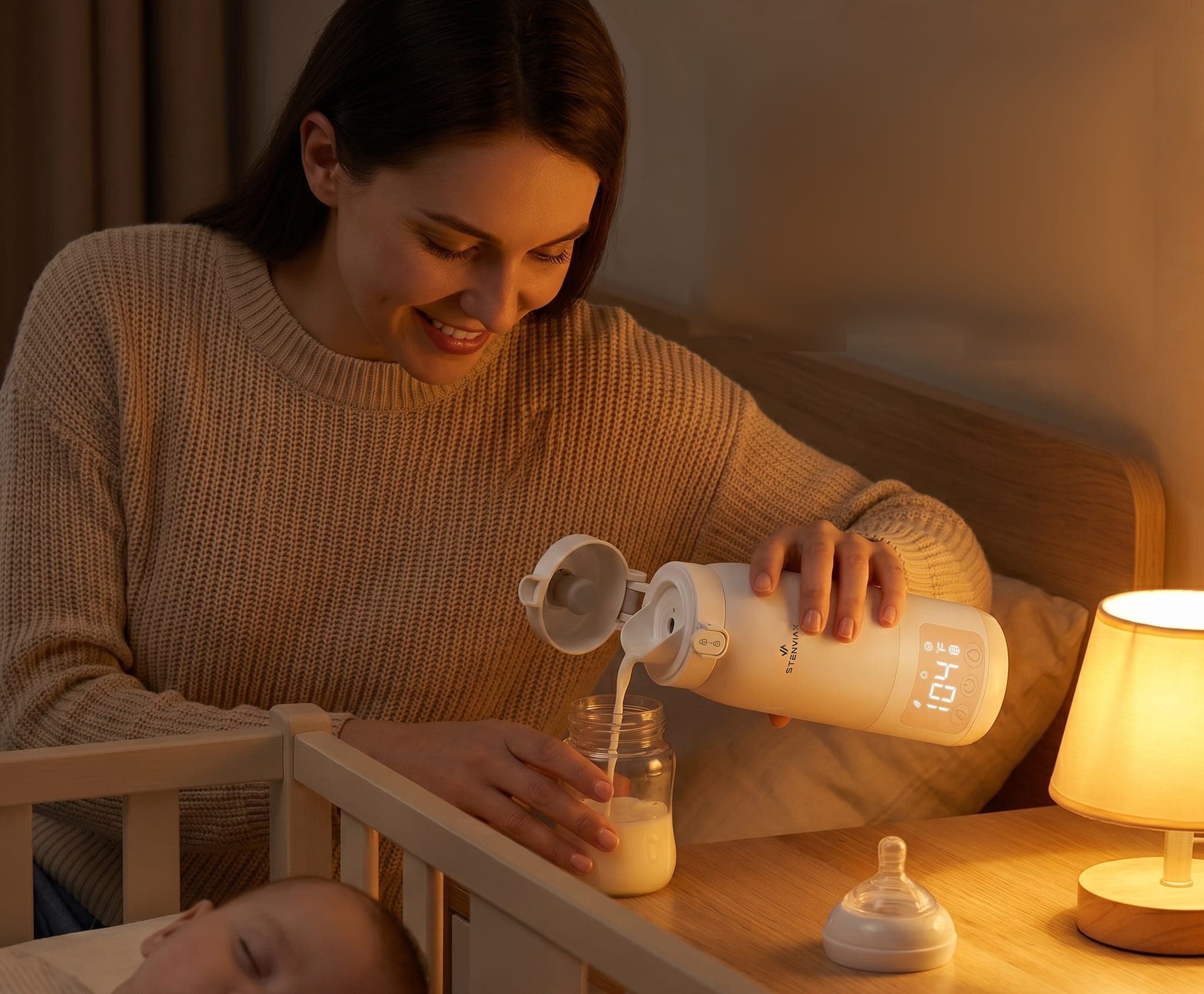
Two tired people, one tiny baby, and a night that belongs to all three of you. Sharing night feeds is one of the kindest things you can do for each other.
How you share depends on how your baby feeds. This plan covers formula, breastfeeding and expressed milk, with the handover details that let whoever is on duty do the same calm thing.
What does sharing night feeds look like for your family?
The NHS puts it plainly: if you have a partner, ask them to help. What that help looks like follows how your baby feeds.
- Formula feeding. The NHS says your partner could share the feeds. Either of you can take any feed.
- Breastfeeding. The NHS suggests your partner helps with diapers or dressing in the morning, so you can go back to sleep.
- Expressed milk. Once you are into a good breastfeeding routine, the NHS says your partner could occasionally give a bottle of expressed breast milk during the night.
However you feed, the NHS also says to try to rest when your baby sleeps. That applies to both of you.
How do you split the night between two parents?
Decide in daylight, when you are both thinking clearly. A plan made at 3 a.m. is usually made by the more tired person.
A simple pattern is shifts. One of you covers the first stretch after bedtime, and the other covers the early hours, so each gets a longer block of sleep. If you breastfeed, your shift might simply be the feeds, while your partner handles everything around them: bringing the baby to you, burping, changing and settling.
Keep the baby's sleep space in the room where one of you sleeps. The AAP recommends sharing a room, but not a bed, for at least the first 6 months.
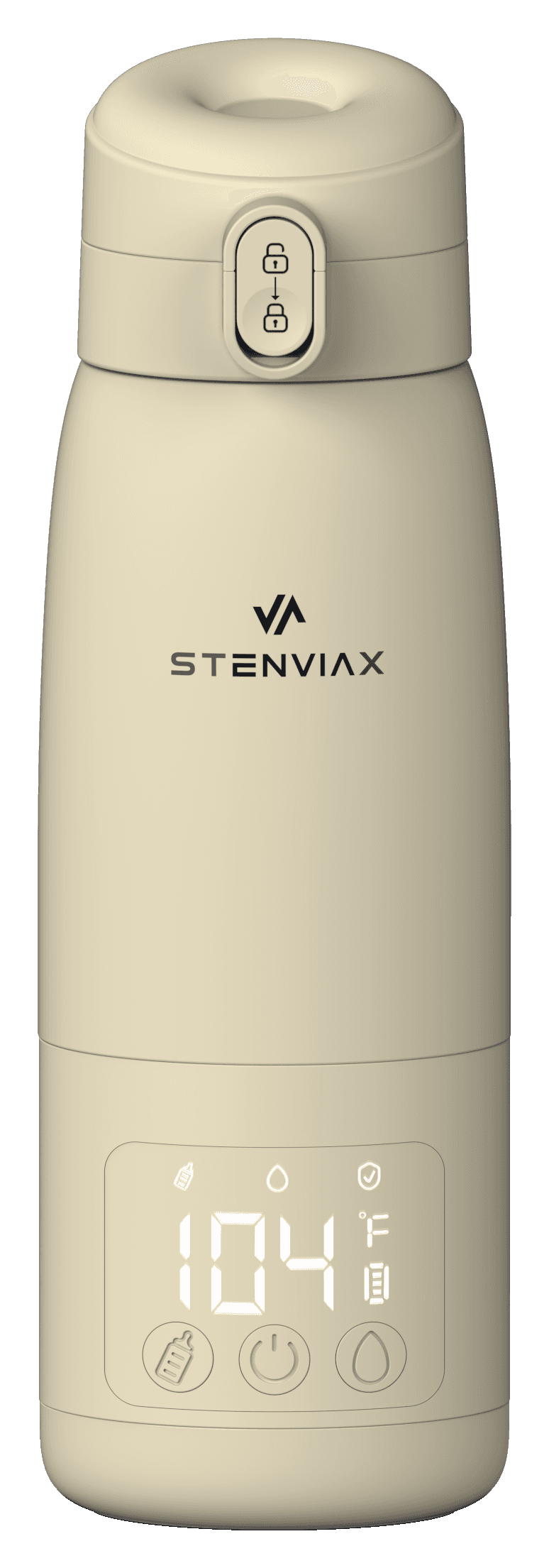
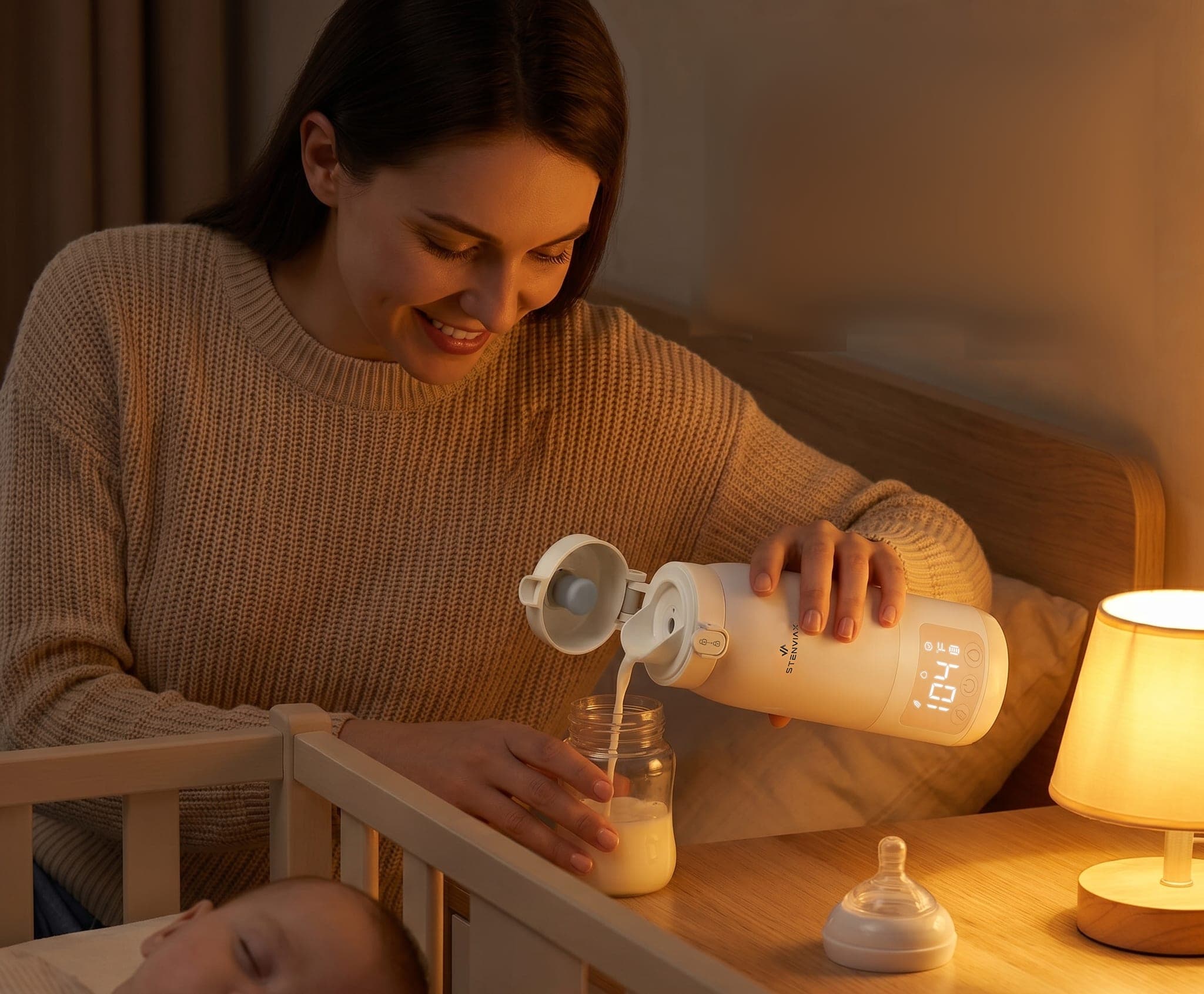
One bedside warmer, the same setting for whoever is on duty.
Stenviax Portable Bottle Warmer Pro, Silk Beige, $69.90
How should a partner give a bottle to a breastfed baby?
Practice in the day before the night. The AAP says many mothers find a bottle works better if someone else offers it at first. For the first few tries, it suggests about ½ ounce of breast milk, an hour or two after a regular feed, when your baby is alert but not so hungry that they are upset.
For the feed itself, the AAP describes a few basics:
- Hold your baby semi-upright, with their head cradled in the crook of your arm.
- Tilt the bottle so milk completely covers the nipple, so your baby is not swallowing air.
- Avoid bottle feeding while your baby lies on their back.
How do you set up a bedside station you can hand over?
A shared station means neither of you has to remember how the other does it. Keep a clean bottle, a burp cloth and the warmer on the nightstand.
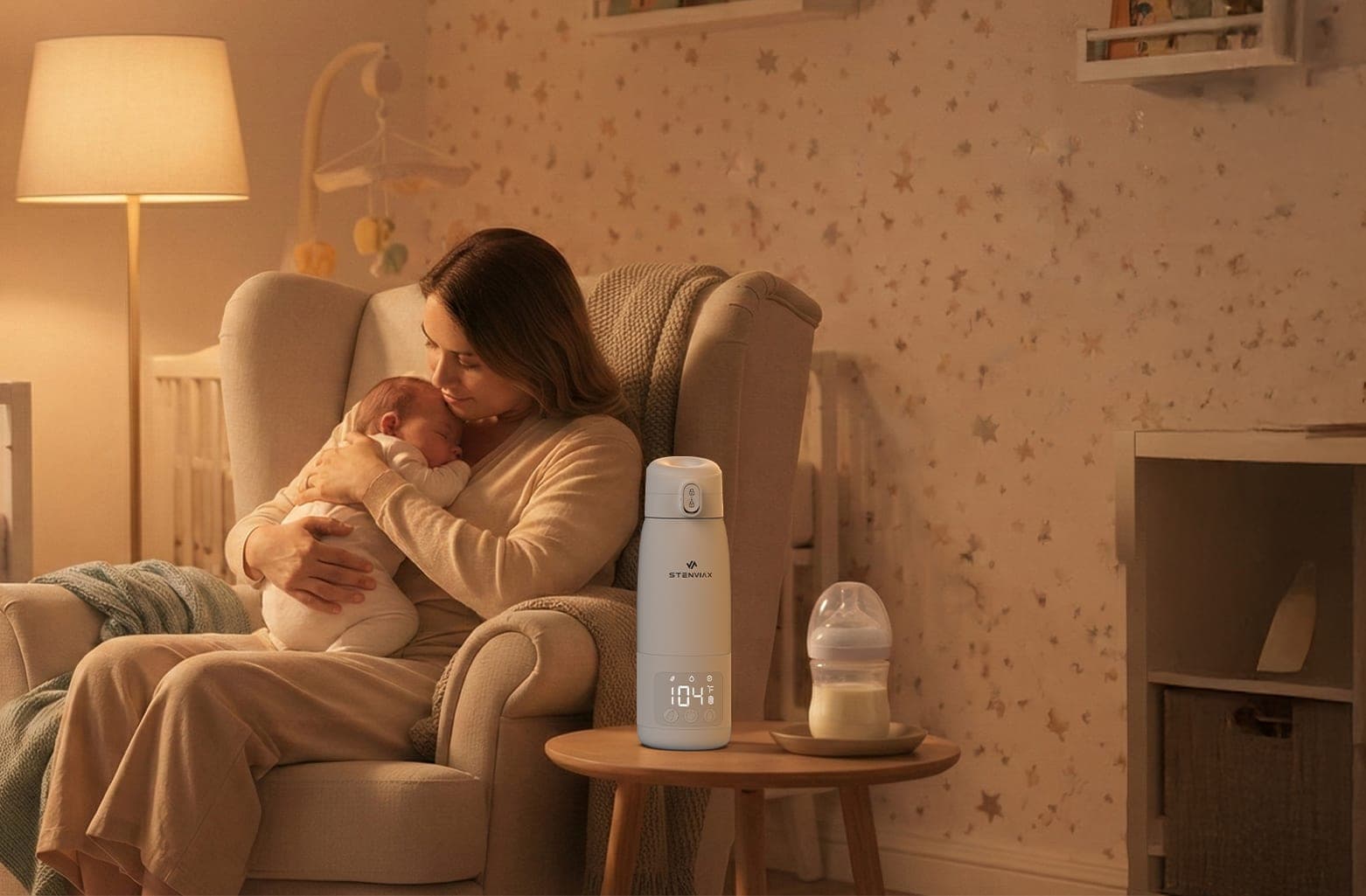
The Stenviax Bottle Warmer Pro makes the handover simple:
- One agreed setting. Choose from 92, 95 or 98 °F for milk, and both of you use the same one.
- No cord at night. It charges from empty to full in about 50 minutes on the 45 W adapter in the box, then stands by for up to 48 hours.
- Warm, then pour. Milk warms in the chamber and pours into any bottle. Measured from refrigerator temperature at a full charge, 4 oz of breast milk reaches 98 °F in about 70 seconds.
- Easy in the dark. The lid opens with one thumb, and if the chamber is empty the warmer stops and shows E2.
Label expressed milk with the date it was expressed, so whoever is on duty uses the oldest first. The CDC says refrigerated milk keeps up to 4 days, and warmed milk should be used within 2 hours. Our breast milk storage guidelines have the full picture.
How do you stay safe when you are both this tired?
Tiredness is the one thing you are both guaranteed. A few rules protect your baby from it.
If either of you brings the baby into bed to feed or comfort them, the AAP says to put them back in their own sleep space before going to sleep. The CDC says to place babies on their back for every sleep, on a firm, flat surface.
Take particular care on the sofa. The AAP warns that the risk of sleep-related infant death is far higher when a baby sleeps with someone on a couch or soft armchair.
If the parent on duty is struggling to stay awake, wake the other one. That is what the plan is for.
For more on the feeds themselves, read our newborn night feeding tips.
Frequently asked questions
- Should my partner do night feeds if I'm breastfeeding?
- Your partner can still help a lot. The NHS suggests your partner takes on diapers or dressing so you can go back to sleep, and once you are into a good breastfeeding routine, occasionally gives a bottle of expressed breast milk during the night.
- How can a partner help with night feeds when formula feeding?
- They can take whole feeds. The NHS says that if you are formula feeding, your partner could share the feeds, so splitting the night into shifts gives each of you a longer stretch of sleep.
- How should a partner introduce a bottle to a breastfed baby?
- Start in the day with a small amount. The AAP suggests having someone other than the mother offer about half an ounce of breast milk an hour or two after a regular feed, when the baby is alert but not upset.
- How long can warmed breast milk sit out between feeds?
- Up to 2 hours. The CDC says that once breast milk is brought to room temperature or warmed, it should be used within 2 hours, and leftover milk should be thrown away after that.
- What is the right way to hold a baby for a bottle feed?
- Hold your baby semi-upright, with their head in the crook of your arm. The AAP also says to tilt the bottle so milk covers the nipple, and to avoid bottle feeding while your baby lies on their back.
Sources
- NHS: Sleep and tiredness after having a baby (opens in a new tab)nhs.uk
- AAP (HealthyChildren.org): Introducing the bottle (opens in a new tab)healthychildren.org
- AAP (HealthyChildren.org): Bottle feeding basics (opens in a new tab)healthychildren.org
- CDC: Breast milk storage and preparation (opens in a new tab)cdc.gov
- AAP (HealthyChildren.org): A parent's guide to safe sleep (opens in a new tab)healthychildren.org
- CDC: Helping babies sleep safely (opens in a new tab)cdc.gov
Made for the nights ahead
The Stenviax Portable Bottle Warmer Pro warms 4 oz of breast milk to 98 °F in about 70 seconds, with no cord and no trip to the kitchen. A thoughtful gift for a new mom, too.
Measured from refrigerator temperature at a full charge.
Silk Beige finish