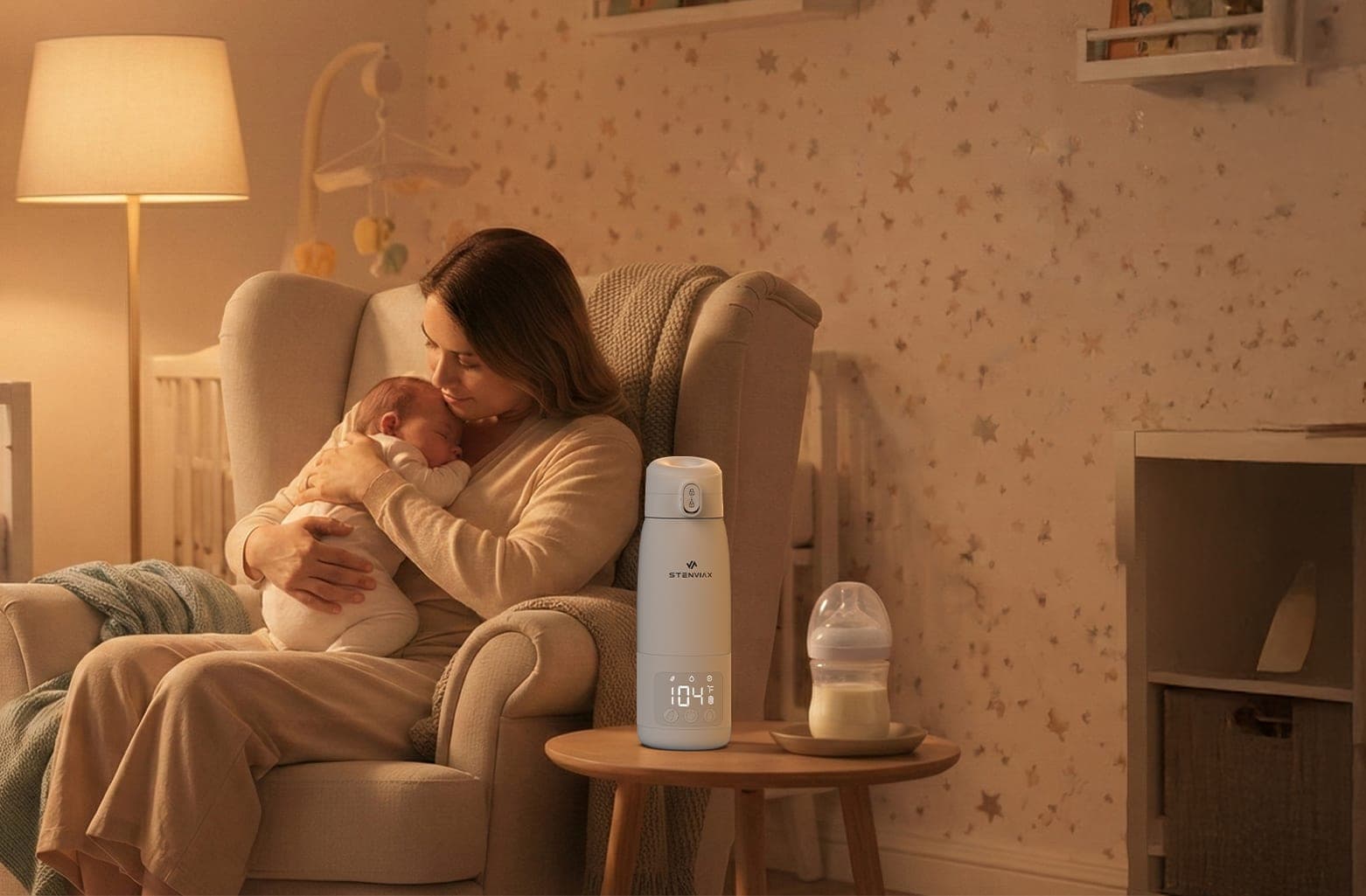
Newborn night feeding tips for calmer 3 a.m. feeds
Newborn night feeding tips for calm, short 3 a.m. feeds: reading early hunger cues, keeping the room dim and quiet, and settling your baby back to sleep safely.
The Stenviax team7 min read
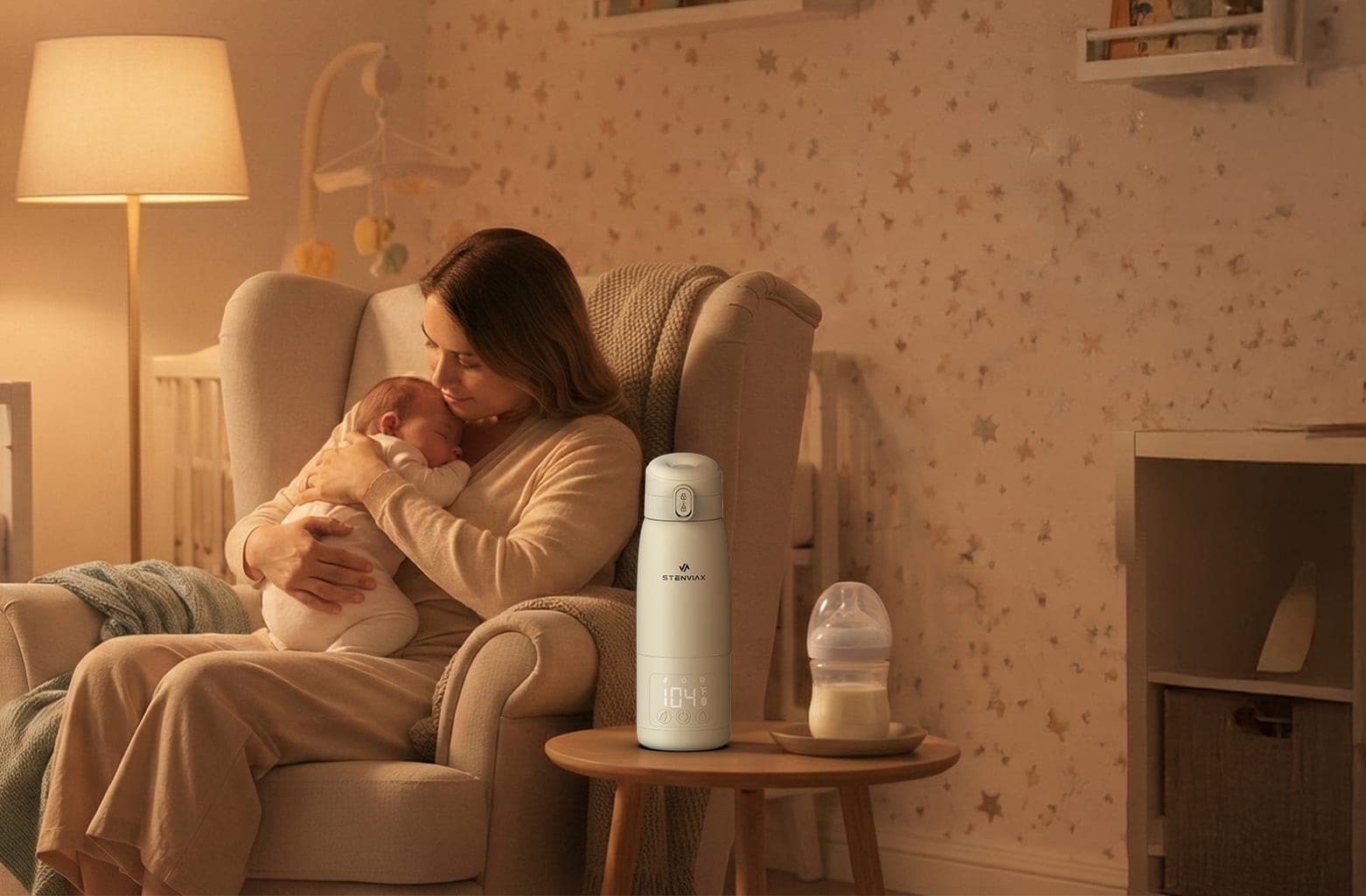
The house is dark, the world is quiet, and a very small person needs you. These are some of the most tiring hours you will ever keep, and some of the sweetest.
These newborn night feeding tips are here to make those hours gentler: knowing when your baby is hungry, keeping the room calm, and settling back to sleep safely when the feed is done.
How often do newborns feed at night?
Often, and that is normal. The CDC says a breastfed baby will feed about 8 to 12 times in 24 hours, and that most formula-fed newborns also feed 8 to 12 times in 24 hours. Those feeds carry on through the night.
In the first days of life, the CDC suggests offering a formula-fed newborn 1 to 2 ounces every 2 to 3 hours. A breastfed baby sets their own rhythm at the breast.
Some babies sleep longer stretches early on. The AAP says that if your baby is having trouble gaining weight, you should not wait too long between feeds, even if it means waking your baby. Your pediatrician can tell you whether that applies to yours.
What are the early signs my baby is hungry?
Crying is a late sign of hunger, the AAP notes. Catching the earlier cues means a calmer baby and a shorter feed. The CDC lists these signs of hunger from birth:
- Putting their hands to their mouth
- Turning their head toward the breast or the bottle
- Puckering, smacking or licking their lips
- Clenched hands
It also lists the signs that your baby is full: closing their mouth, turning their head away, and relaxing their hands. At 3 a.m., those soft, open little hands are a lovely signal that you can both go back to sleep.
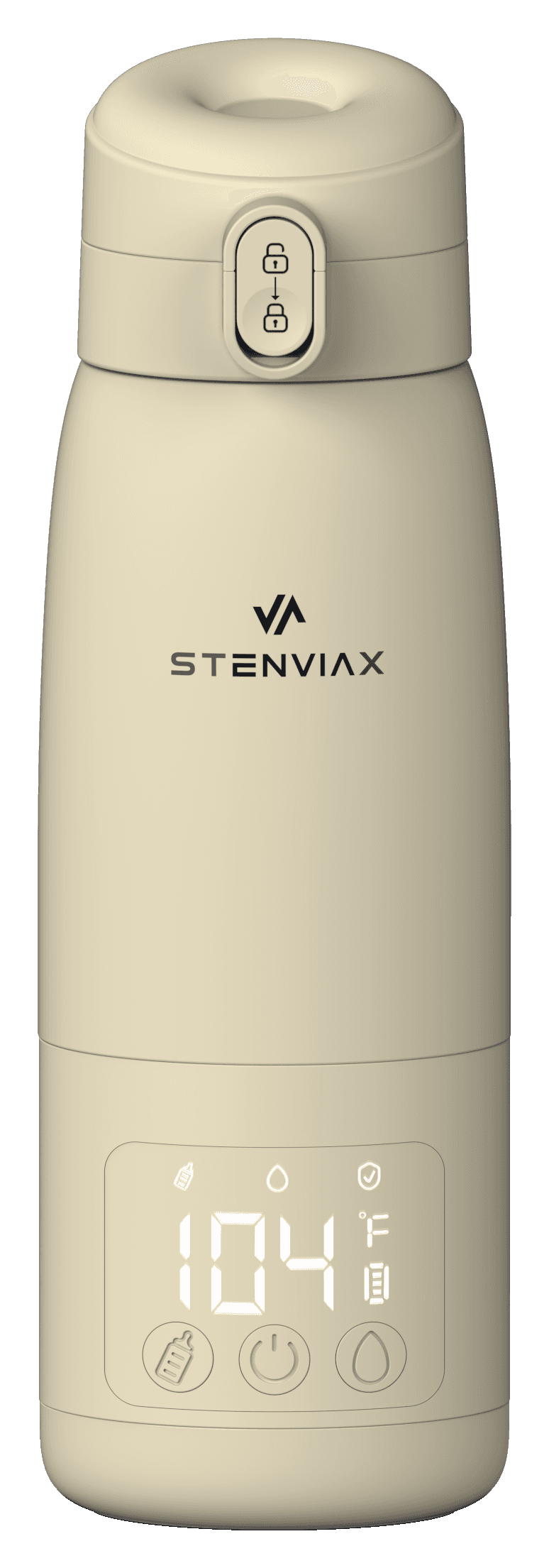
A warm bottle within reach of the crib.
Stenviax Portable Bottle Warmer Pro, Silk Beige, $69.90
How do I keep night feeds calm and quiet?
The NHS suggests teaching your baby from the start that night-time is different from daytime. During night feeds, that comes down to three small things:
- Keep the lights down low.
- Talk very little, and keep your voice quiet.
- Change your baby only if they need it.
Everything else is about removing steps. Lay out what you need before bed: a clean bottle, a burp cloth, a glass of water for you. If you feed from a bottle, the walk to the kitchen is often the longest part of the night, and we wrote a whole routine for closing that gap in night feeds without the kitchen trip.
Newborn night feeding tips for bottle feeds
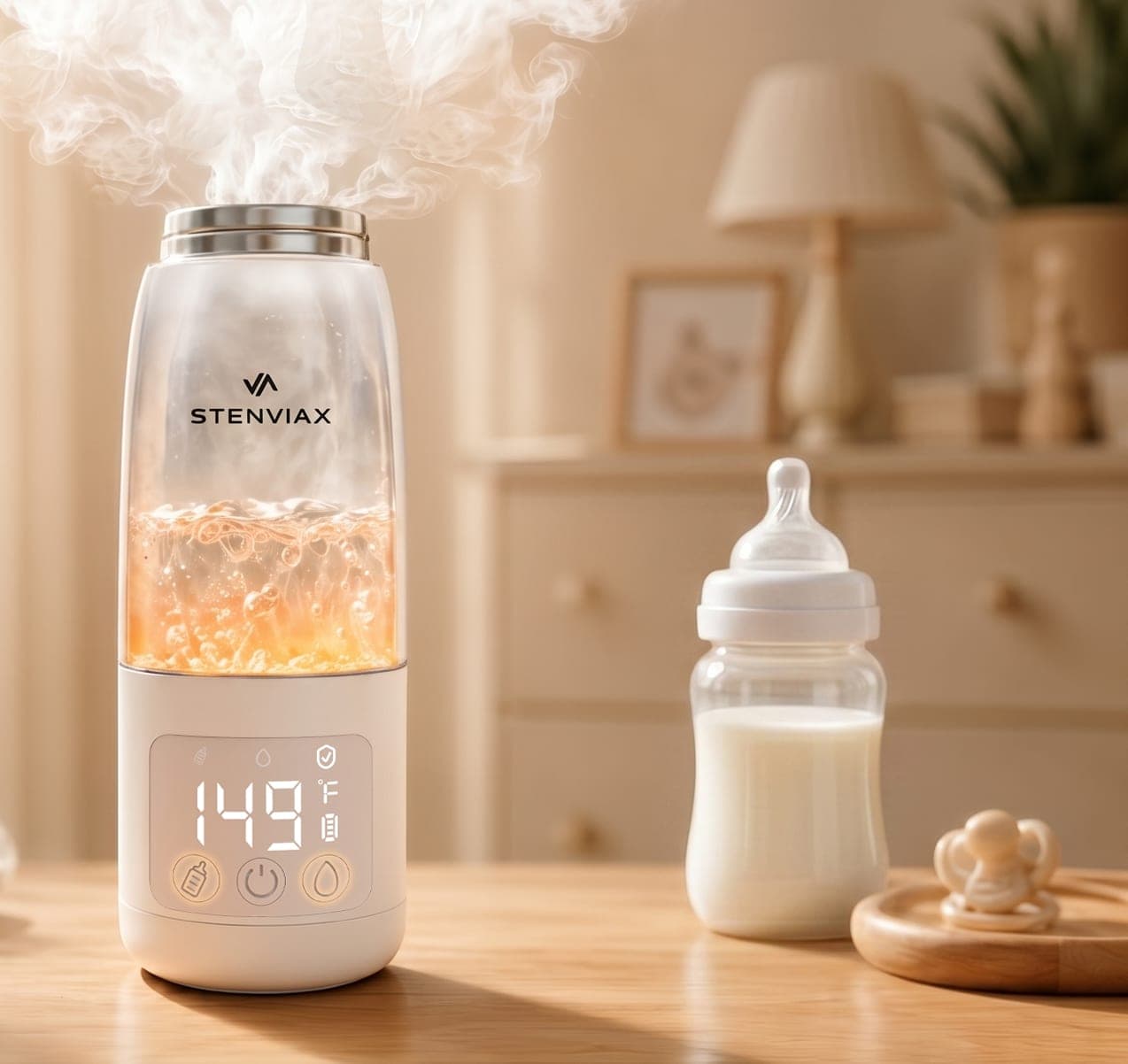
A bedside bottle routine works best when nothing needs deciding in the dark. The Stenviax Bottle Warmer Pro was designed for exactly this hour.
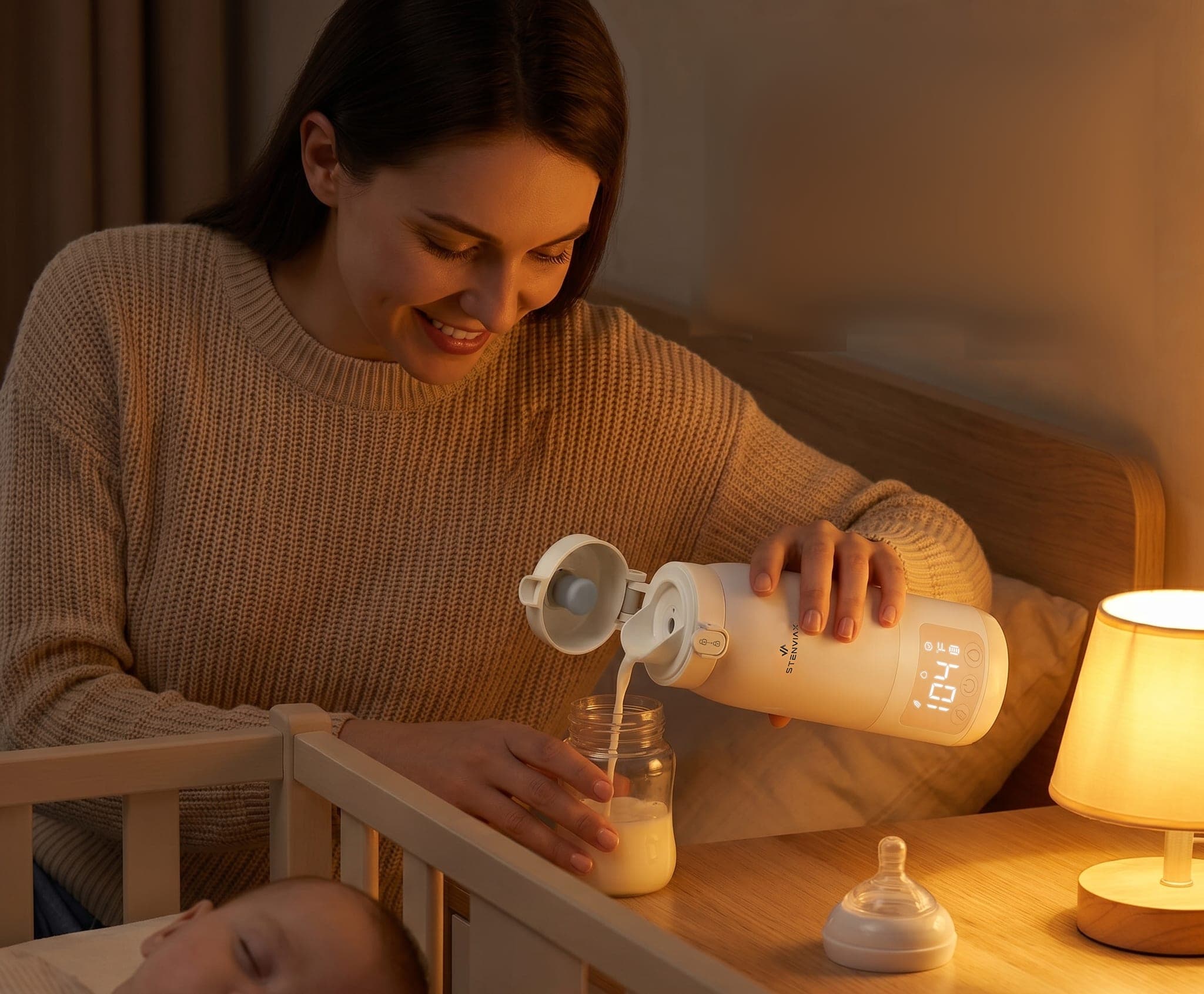
- Pick one setting and keep it. The warmer has seven: 92, 95 and 98 °F for milk, and 98, 104, 110 and 122 °F for water. The same setting every night is one less thing to think about.
- Let it wait by the bed. On the 45 W adapter in the box it charges from empty to full in about 50 minutes, then stands by for up to 48 hours with no cord.
- Warm, then pour. Milk warms in the 17 oz chamber and pours into any bottle. Measured from refrigerator temperature at a full charge, 4 oz of breast milk reaches 98 °F in about 70 seconds.
- Keep an arm free. The lid opens with one thumb, and if the chamber is empty the warmer stops and shows E2.
Warm one feed's worth at a time. The CDC says to use warmed breast milk within 2 hours, and never to heat it in a microwave. For formula, follow the instructions on your formula and the CDC's timing: within 2 hours of preparation, and within 1 hour from when feeding begins.
Before every feed, test a few drops on the inside of your wrist. The NHS says it should feel warm or cool, but not hot.
Where should my baby sleep after a night feed?
This matters most when you are at your most tired. The AAP recommends sharing a room with your baby for at least the first 6 months, with their sleep area close to your bed but not in it.
If you bring your baby into your bed to feed or comfort them, the AAP says to place them back in their own sleep space before you go to sleep. The CDC adds the rest: on their back for every sleep, on a firm, flat surface such as a mattress in a safety-approved crib with a fitted sheet.
Be careful with the sofa. The AAP warns that the risk of sleep-related infant death is far higher when a baby sleeps with someone on a couch, soft armchair or cushion. If you feel yourself drifting mid-feed, lay your baby down in their crib first.
If these are your very first nights together, our story on your first night home with a newborn walks through them gently. And if there are two of you, sharing night feeds with your partner can give you both a longer stretch of sleep.
Frequently asked questions
- How often should a newborn eat at night?
- About as often as during the day. The CDC says newborns feed about 8 to 12 times in 24 hours, and those feeds continue overnight. If your baby is having trouble gaining weight, the AAP says not to wait too long between feeds, even if that means waking your baby.
- What are the signs a newborn is hungry?
- Early hunger cues come before crying. The CDC lists hands to the mouth, turning the head toward the breast or bottle, puckering, smacking or licking the lips, and clenched hands. The AAP calls crying a late sign of hunger.
- Should I change my baby's diaper during night feeds?
- Only if your baby needs it. The NHS suggests keeping the lights low, talking quietly and changing your baby only when needed, so your baby learns that night-time is different from daytime.
- Is it safe to feed my baby in bed at night?
- You can feed in bed, as long as your baby goes back to their own sleep space before you go to sleep. That is the AAP's guidance, along with sharing a room, but not a bed, for at least the first 6 months.
- How long is warmed breast milk good for?
- Use it within 2 hours. The CDC says that once breast milk is brought to room temperature or warmed, it should be used within 2 hours, and that breast milk should never be thawed or heated in a microwave.
Sources
- CDC: How much and how often to breastfeed (opens in a new tab)cdc.gov
- CDC: How much and how often to feed infant formula (opens in a new tab)cdc.gov
- CDC: Signs your child is hungry or full (opens in a new tab)cdc.gov
- AAP (HealthyChildren.org): How often and how much should your baby eat? (opens in a new tab)healthychildren.org
- NHS: Helping your baby to sleep (opens in a new tab)nhs.uk
- CDC: Breast milk storage and preparation (opens in a new tab)cdc.gov
- CDC: Infant formula preparation and storage (opens in a new tab)cdc.gov
- NHS: How to make up baby formula (opens in a new tab)nhs.uk
- AAP (HealthyChildren.org): A parent's guide to safe sleep (opens in a new tab)healthychildren.org
- CDC: Helping babies sleep safely (opens in a new tab)cdc.gov
Made for the nights ahead
The Stenviax Portable Bottle Warmer Pro warms 4 oz of breast milk to 98 °F in about 70 seconds, with no cord and no trip to the kitchen. A thoughtful gift for a new mom, too.
Measured from refrigerator temperature at a full charge.
Silk Beige finish