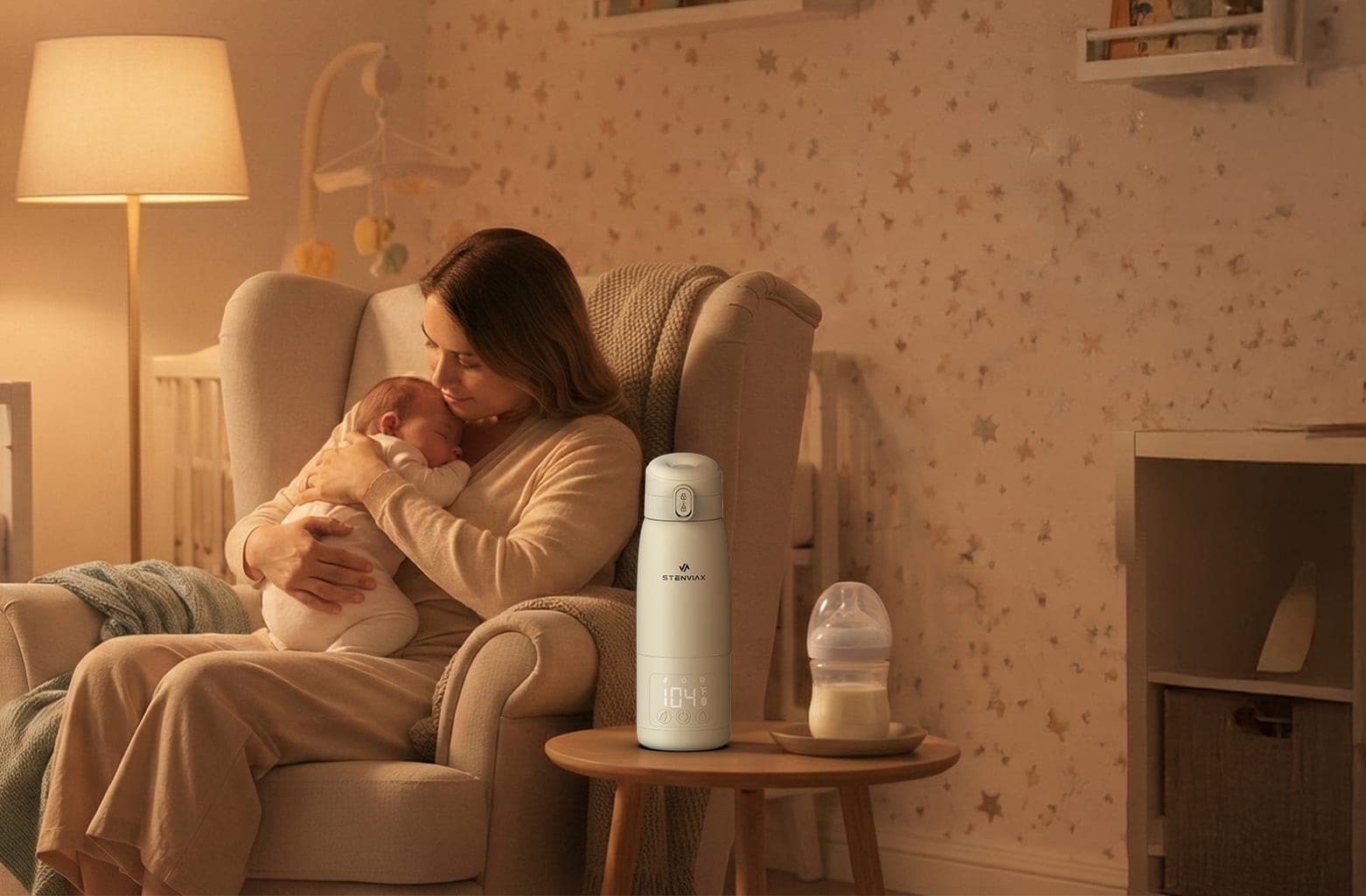
First night home with a newborn: a calm, simple guide
Your first night home with a newborn, made calmer: safe sleep basics, how often babies feed, a quiet bedside setup for bottles, and kind ways to care for yourself.
The Stenviax team6 min read
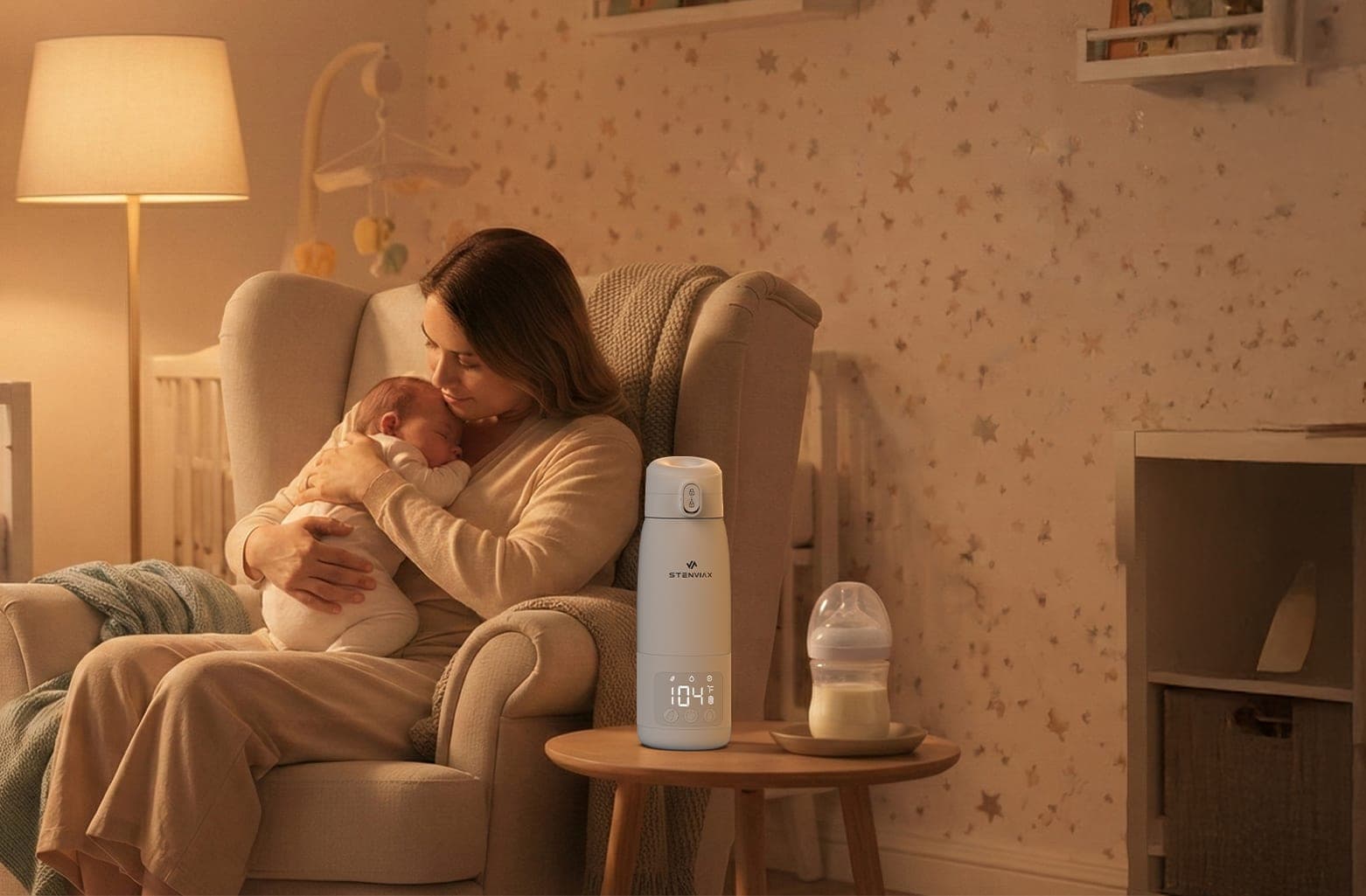
You are home. The house is very quiet, and the smallest person you have ever loved is asleep an arm's length away.
Your first night home with a newborn can feel enormous. It does not need to be perfect. It needs to be safe, fed and as restful as you can make it, and you can do that.
How to prepare for your first night home with a newborn
Most of the calm comes from what you set up in daylight.
The ride home comes first. The AAP says all infants should ride rear-facing, starting with their first ride home from the hospital, and recommends professional help to check the seat is properly installed.
Once you are in, keep the evening small. Eat something warm, dim the lights and let visitors wait for another day.
Before bed, gather what the night will ask of you in one place near where your baby sleeps: diapers, wipes, a change of clothes, burp cloths, a glass of water for you and a soft, low light.
How often will my newborn feed tonight?
Often, and that is normal. The CDC says babies usually feed about 8 to 12 times in 24 hours, and a breastfed newborn may want to eat as often as every 1 to 3 hours.
If you are formula feeding, the CDC suggests starting with 1 to 2 ounces every 2 to 3 hours in the first days, and offering more if your baby shows signs of hunger. Follow the instructions on your formula for preparing each bottle.
Watch your baby as well as the clock. Early hunger cues include hands to the mouth, turning toward the breast or bottle, puckering or licking lips, and clenched hands. A closed mouth, a turned-away head and relaxed hands usually mean your baby is full.
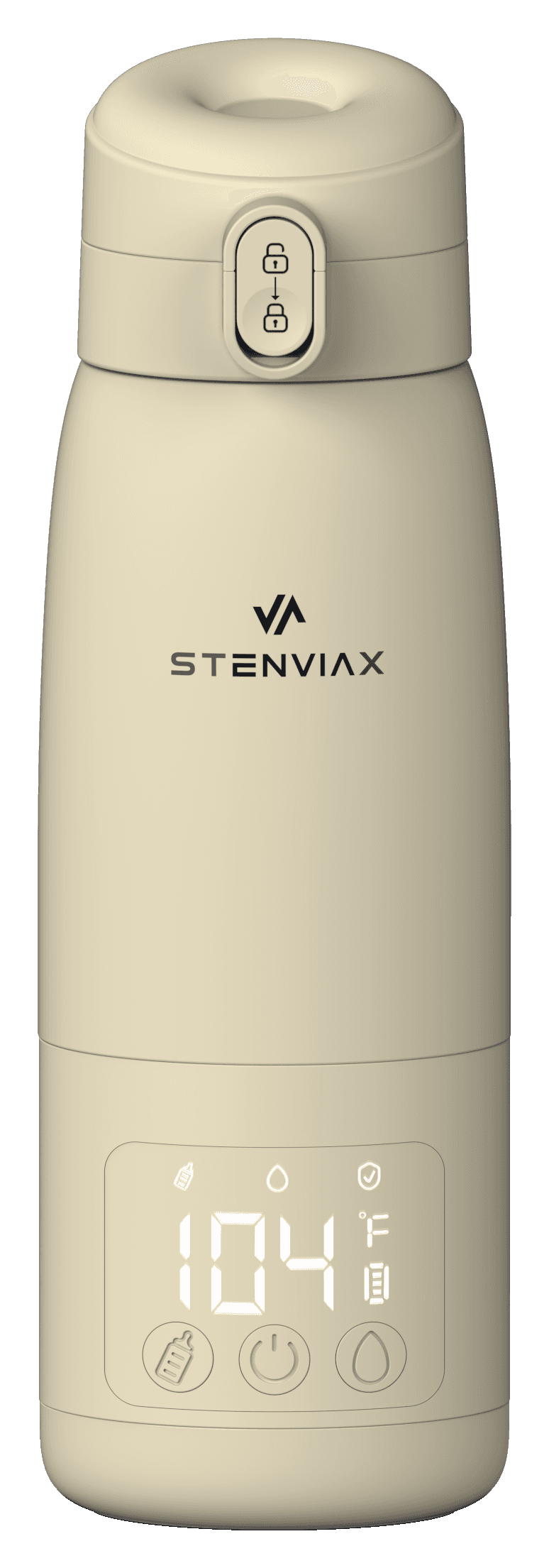
Warm a bottle at the bedside, without the kitchen trip
Stenviax Portable Bottle Warmer Pro, Silk Beige, $69.90
How should a newborn sleep on the first night home?
Safe sleep is the same on the first night as on every night after it. The AAP, CDC and NHS agree on the basics.
- On their back, for every sleep, naps included.
- On a firm, flat surface, such as a crib mattress covered by a fitted sheet.
- In your room, in their own space. Keep the crib or bassinet in the room where you sleep, ideally for at least the first 6 months.
- With nothing soft. No pillows, quilts, blankets, bumper pads or soft toys in the sleep area.
- Not too warm. Do not cover your baby's head, and check for sweating or a hot chest.
Warming a bottle at the bedside
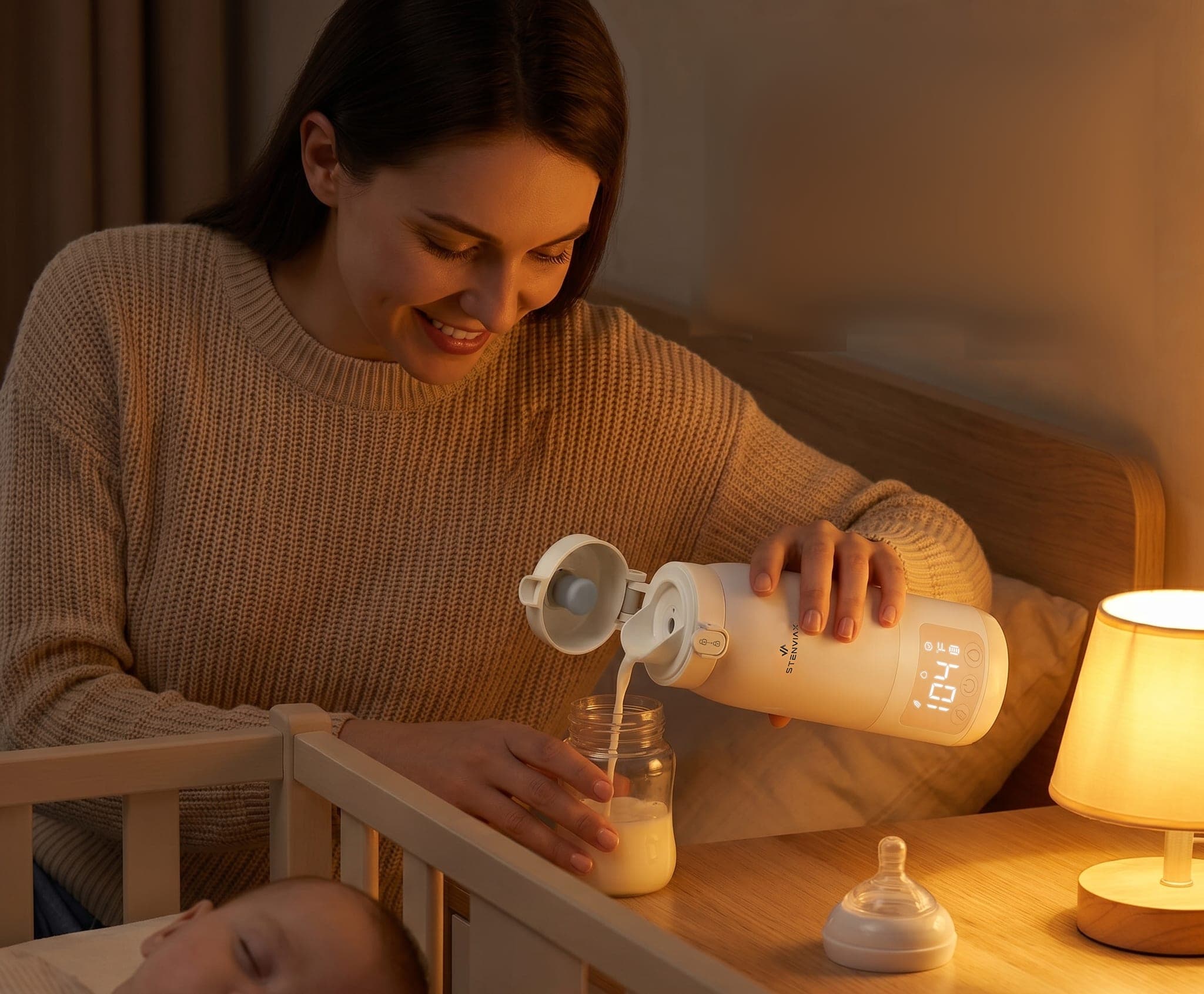
A night feed is gentler when you do not have to leave the room. A charged, cordless warmer on the nightstand keeps everything close.
With the Stenviax Bottle Warmer Pro, pour chilled expressed milk into the 17 oz / 500 ml chamber and choose 92, 95 or 98 °F. The manual sets 98 °F as the highest temperature to use for breast milk, and the warmer beeps twice when it gets there.
Measured from refrigerator temperature at a full charge, 4 oz of breast milk reaches 98 °F in about 70 seconds. Pour it into your baby's usual bottle and settle back in.
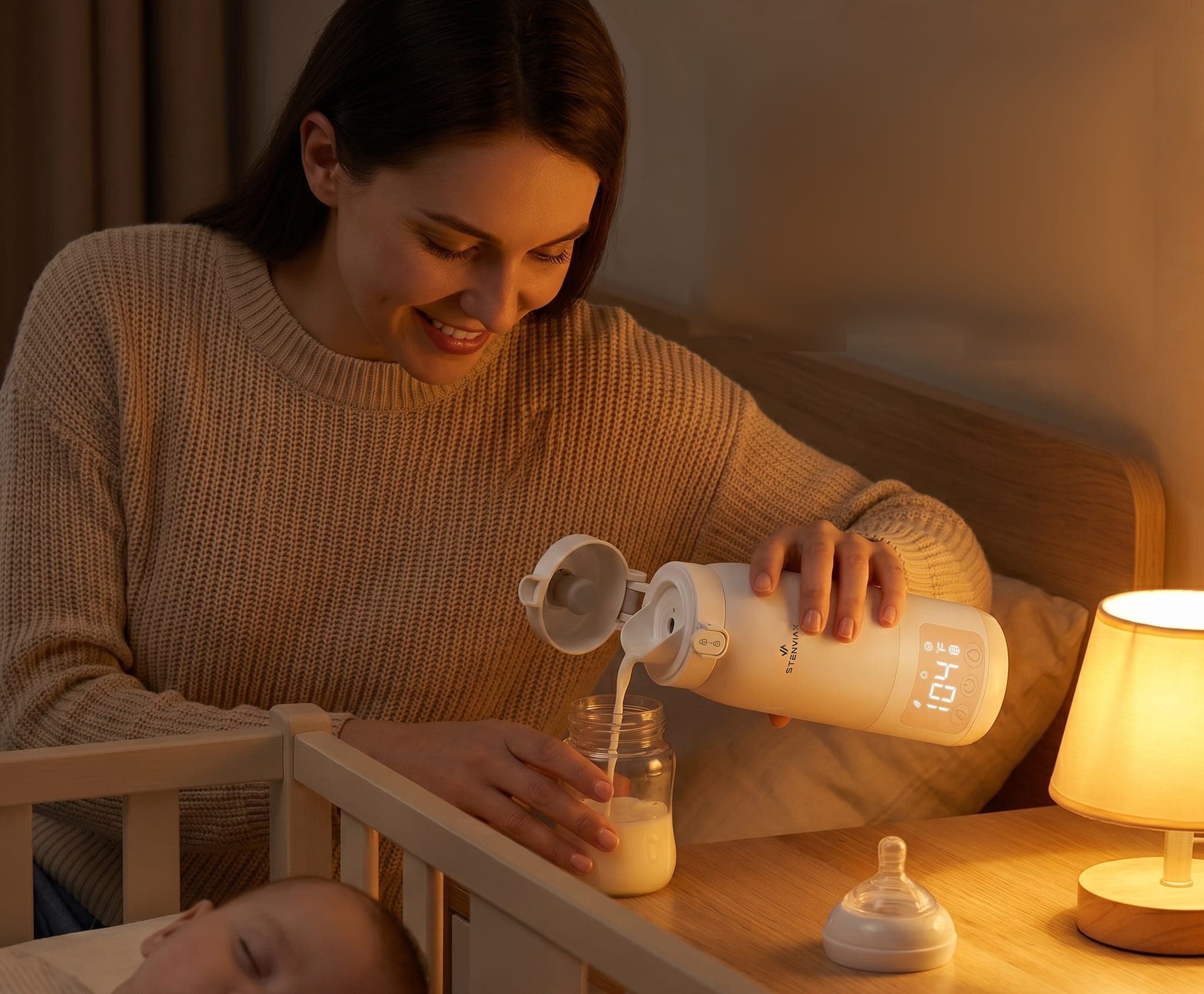
A few habits keep each bottle safe. The CDC advises never heating breast milk in a microwave, testing a few drops on your wrist before feeding, and using leftover milk within 2 hours of the feed.
Charge the warmer the day before. It takes about 50 minutes on the 45 W adapter in the box, then waits up to 48 hours on standby. For a fuller routine, read night feeds without the kitchen trip and our newborn night feeding tips.
Looking after yourself tonight
Your baby needs you rested enough to keep going, not perfect.
If you have a partner, take turns so each of you gets one longer stretch of sleep. Say yes when someone offers to help tomorrow.
Keep water and a snack where you feed. Let the dishes wait.
And if anything about your baby worries you tonight, call your baby's doctor or your local health line. Asking is always the right thing to do.
You will not remember every hour of this night. You will remember that you held them, fed them and kept them safe. That is love, and it is enough. When you are ready for the nights ahead, see the Stenviax Bottle Warmer Pro.
Frequently asked questions
- How often should a newborn eat on the first night home?
- A newborn usually feeds about 8 to 12 times in 24 hours, according to the CDC. A breastfed baby may want to feed as often as every 1 to 3 hours, and a formula-fed baby often takes 1 to 2 ounces every 2 to 3 hours in the first days.
- Where should my newborn sleep on the first night?
- Your newborn should sleep on their back in their own crib or bassinet in your room. The AAP and CDC recommend sharing a room, without sharing a bed, ideally for at least the first 6 months.
- Can I put a blanket in the crib on the first night?
- Keep blankets out of the crib, on the first night and every night. The AAP and CDC advise a firm, flat mattress with a fitted sheet and no pillows, quilts, blankets, bumper pads or soft toys.
- How do I know if my newborn is hungry?
- Hands to the mouth, turning toward the breast or bottle, puckering or licking lips, and clenched hands are early hunger cues, according to the CDC. Feeding at these early signs helps, since crying is a later cue.
- How do I warm a bottle quickly at night without going to the kitchen?
- A cordless bottle warmer on the nightstand warms milk where you are. Measured from refrigerator temperature at a full charge, the Stenviax Bottle Warmer Pro takes 4 oz of breast milk to 98 °F in about 70 seconds.
Sources
- AAP, HealthyChildren.org: How to keep your sleeping baby safe (opens in a new tab)healthychildren.org
- CDC: Providing care for babies to sleep safely (opens in a new tab)cdc.gov
- NHS: Sudden infant death syndrome (SIDS) (opens in a new tab)nhs.uk
- CDC: How much and how often to breastfeed (opens in a new tab)cdc.gov
- CDC: How much and how often to feed infant formula (opens in a new tab)cdc.gov
- CDC: Signs your child is hungry or full (opens in a new tab)cdc.gov
- CDC: Breast milk storage and preparation (opens in a new tab)cdc.gov
- AAP, HealthyChildren.org: Car seats, information for families (opens in a new tab)healthychildren.org
Made for the nights ahead
The Stenviax Portable Bottle Warmer Pro warms 4 oz of breast milk to 98 °F in about 70 seconds, with no cord and no trip to the kitchen. A thoughtful gift for a new mom, too.
Measured from refrigerator temperature at a full charge.
Silk Beige finish