Road trip with a baby: what to pack and when to stop
Planning a road trip with a baby? When to take breaks, how to handle feeds with the car parked, car seat basics from the AAP, and a packing list that fits the day.
The Stenviax team6 min read
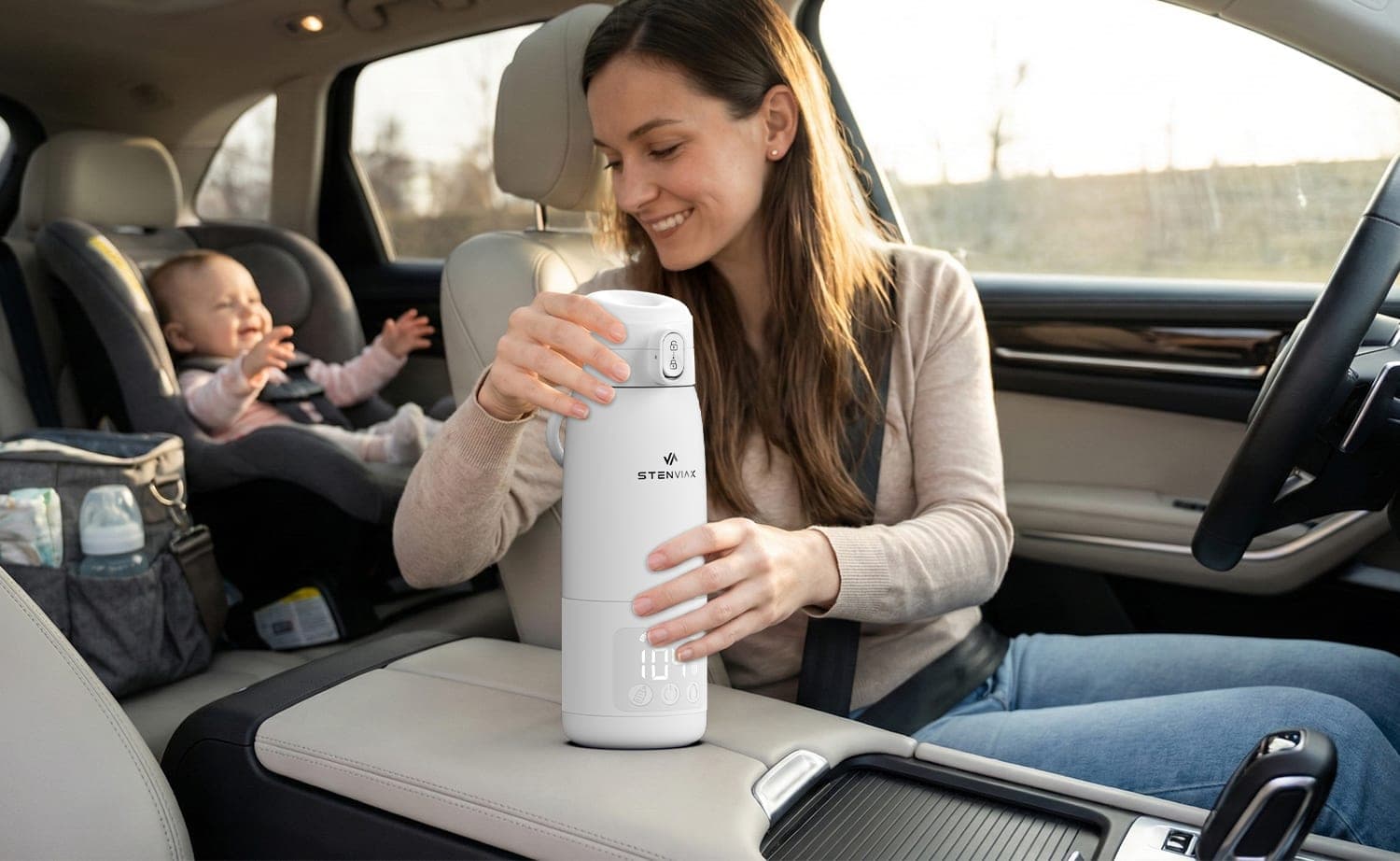
The first long drive with your baby is a small milestone. The car holds more than it ever has, and the reason for all of it is in the back seat.
A road trip with a baby goes best when you plan it around your baby's day rather than the map. Here is when to stop, how to handle feeds, the car seat basics, and what to pack.
How do you plan a road trip with a baby?
Start with your baby's rhythm. Note when feeds and naps usually fall, then line the long stretches up with sleep and the stops up with feeds.
The AAP suggests a break every 2 to 3 hours on a day trip, and every 4 to 6 hours at night. A stop lets you feed your baby at their usual times, change a diaper, and stretch your own legs.
Build those stops into your arrival time before you leave. A four-hour drive with a baby is closer to five, and knowing that at breakfast takes the pressure off.
If you can, have a second adult ride in the back. The AAP notes it is always best to have an adult or responsible older child beside your baby on the way.
Car seat basics before you set off
The AAP advises that infants and toddlers ride rear-facing as long as possible, until they reach the highest weight or height their car seat allows. Never place a rear-facing seat in the front seat of a car with an airbag.
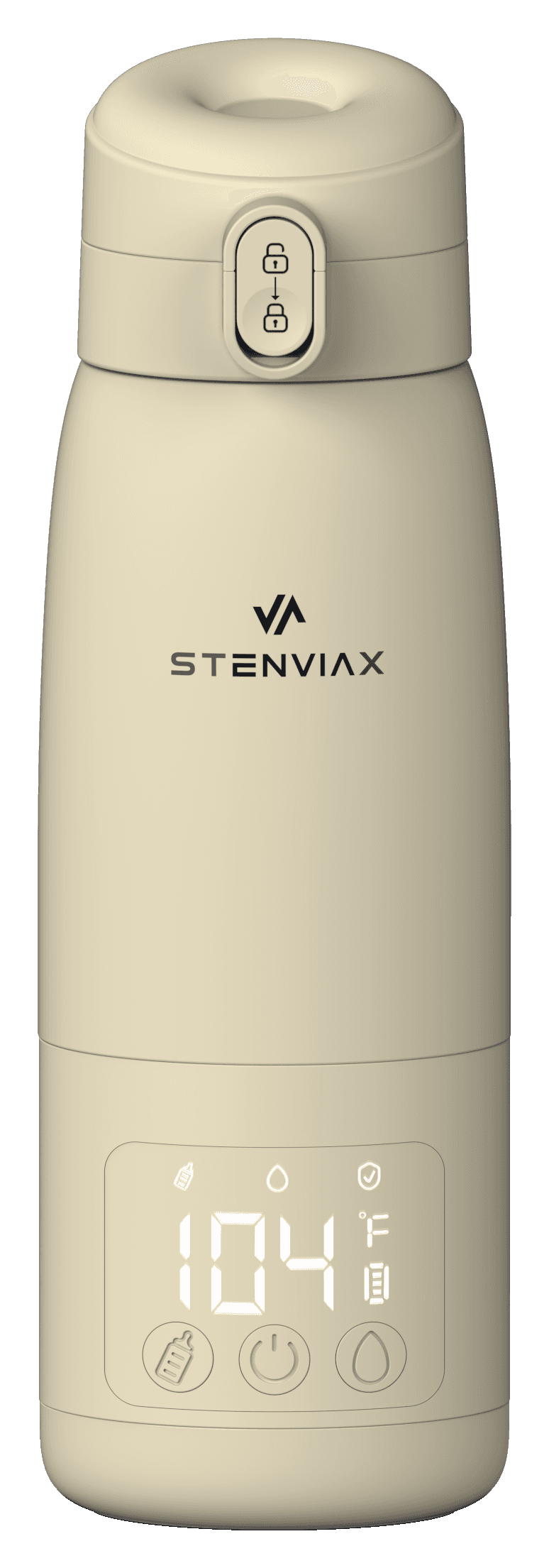
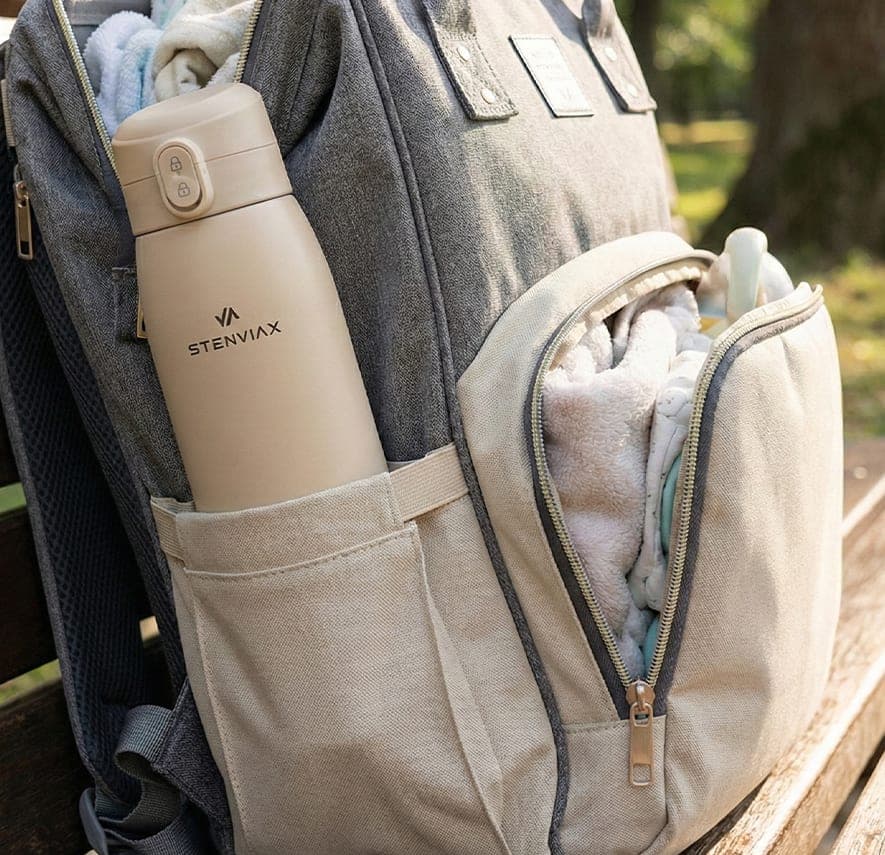
Warm milk at the rest stop, on its own battery.
Stenviax Portable Bottle Warmer Pro, Silk Beige, $69.90
Babies can sleep in a properly installed car seat while you are on the move. Once you arrive, the AAP says to move them to a crib, bassinet or portable play yard, because a car seat is not a safe place to sleep outside the car.
Never leave your baby alone in the car, even for a minute. The AAP warns that the temperature inside a car can reach deadly levels in minutes.
Feeding a baby on a road trip
Every feed happens with the car stopped. Pull into a rest area or a safe parking spot, and only then take your baby out of the car seat. Never feed a baby while the car is moving.
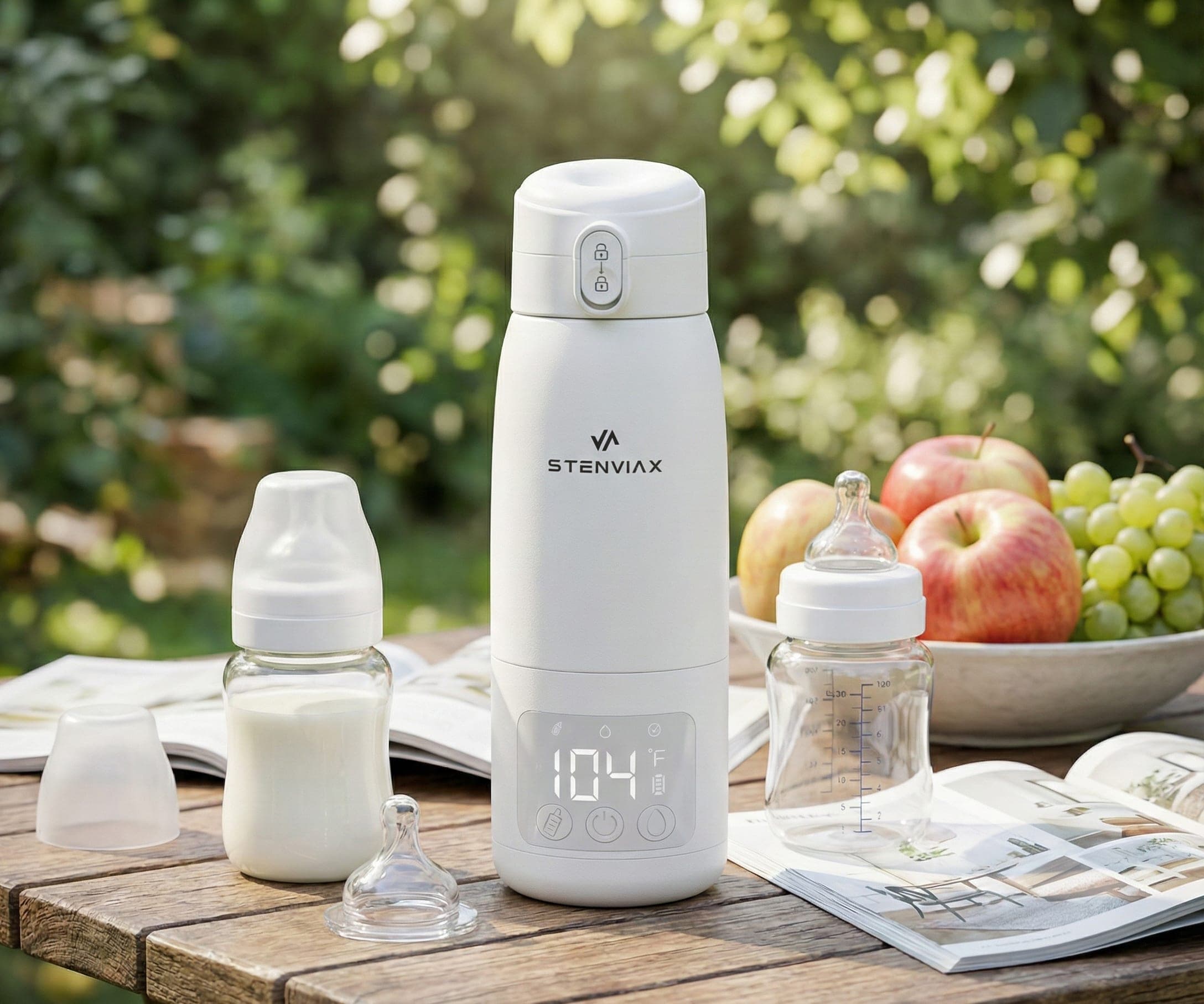
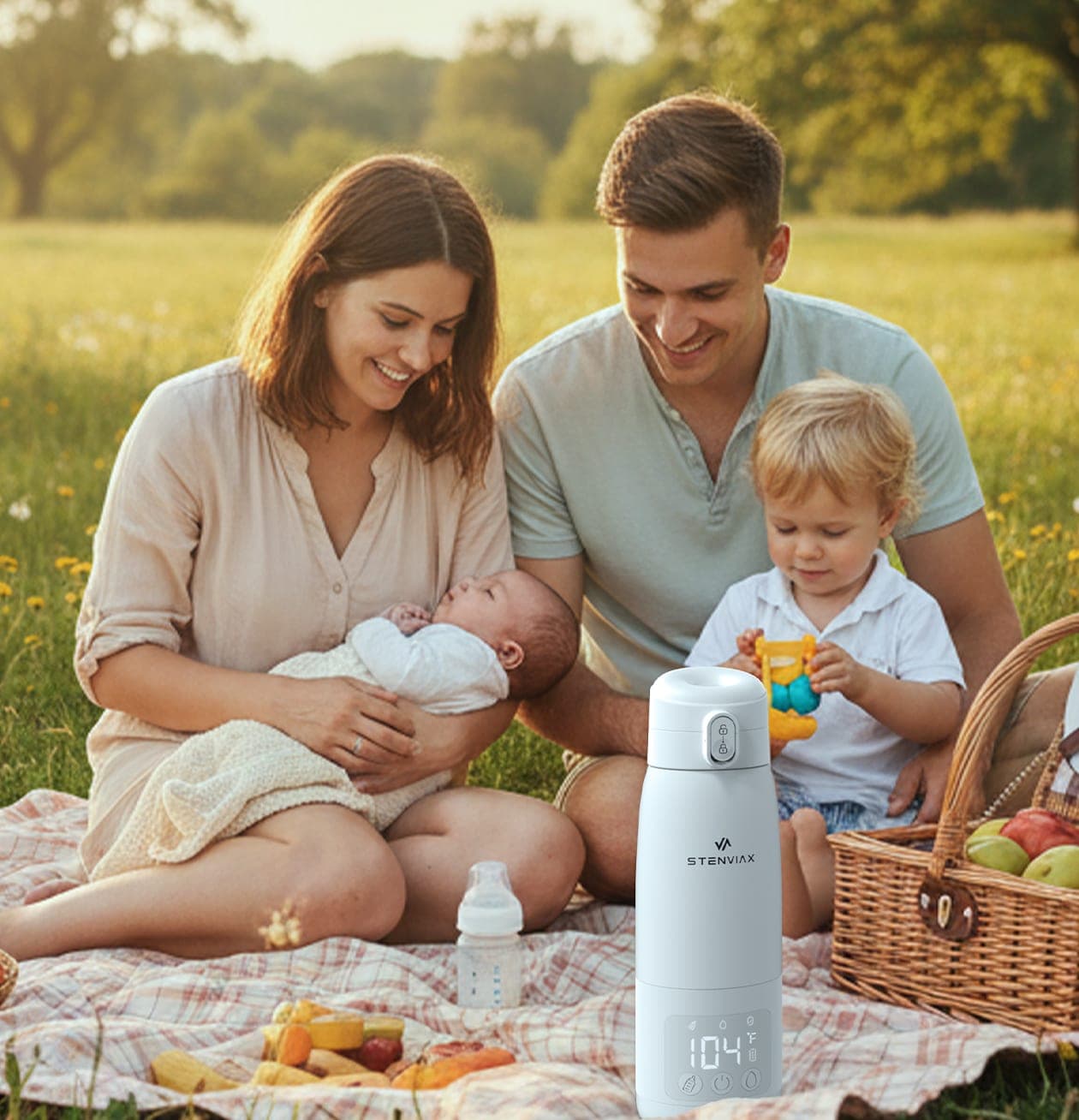
Once you are parked, the feed can be quick. The Stenviax Bottle Warmer Pro runs on its own 14,000 mAh battery, so it needs no socket and no engine running.
Pour breast milk into its chamber and choose 92, 95 or 98 °F. Measured from refrigerator temperature at a full charge, 4 oz of breast milk reaches 98 °F in about 70 seconds, and it beeps twice when ready.
The milk pours into your baby's own bottle, whatever the brand. For formula, heat water on one of the four water settings, 98, 104, 110 or 122 °F, and follow the instructions on your formula.
Before every feed, test a few drops on your wrist, as the CDC advises. Once breast milk is warmed, use it within 2 hours.
How do you keep breast milk cold on a long drive?
The CDC says breast milk can be stored in an insulated cooler with frozen ice packs for up to 24 hours when traveling. Pack the day's feeds in the order you will use them, so a busy rest stop holds one less decision.
Flying instead? Our guide to flying with baby bottles covers what TSA allows.
What to pack for a road trip with a baby
Keep a feeding bag apart from the luggage, packed so it comes out in one lift when you park.
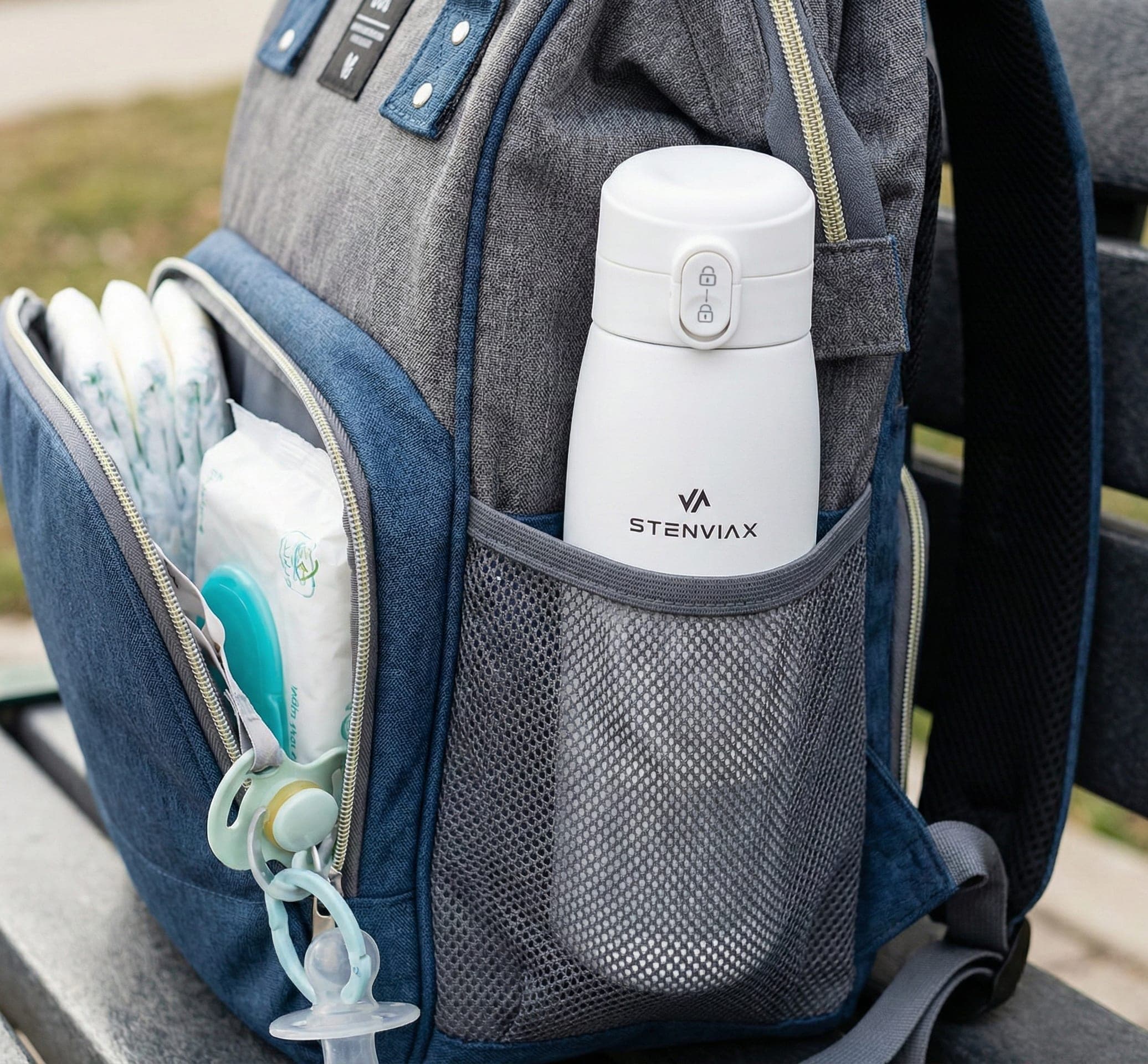
- The warmer, fully charged: about 50 minutes from empty on the 45 W adapter in the box, and up to 48 hours on standby.
- Breast milk in an insulated cooler with frozen ice packs, or formula and water for each feed.
- Your baby's usual bottles, plus a spare.
- A bag for used bottles, and a cloth for spills.
- Diapers, wipes, and a change of clothes for your baby and for you.
- A bassinet or portable play yard, if you are not sure of a safe sleep space where you are going.
Sleeping under the stars at the other end? Our guide to camping with a baby picks up where the drive ends.
The miles go a little slower with a baby on board. Some of the best moments of the trip happen at the stops.
Frequently asked questions
- How often should you stop on a road trip with a baby?
- Plan a break every 2 to 3 hours on a day trip and every 4 to 6 hours at night, as the AAP suggests. Those stops are when you feed, change and stretch.
- Can I feed my baby in the car while driving?
- No, always stop the car first. Park somewhere safe, take your baby out of the car seat for the feed, and buckle them back in before you drive on.
- Can a baby sleep in a car seat on a long drive?
- Yes, while the car is moving and the seat is properly installed. Once you arrive, the AAP says to move your baby to a crib, bassinet or portable play yard.
- How do you warm a bottle on a road trip?
- Warm it at a stop, with the car parked. The Stenviax Bottle Warmer Pro runs on its own battery and warms 4 oz of breast milk to 98 °F in about 70 seconds, measured from refrigerator temperature at a full charge.
- How long does breast milk last in a cooler?
- Up to 24 hours in an insulated cooler with frozen ice packs, according to the CDC. Once warmed, use it within 2 hours.
Sources
- AAP (HealthyChildren.org): Is it safe for my baby to travel in a car seat for hours at a time? (opens in a new tab)healthychildren.org
- AAP (HealthyChildren.org): Tips for safe and stress-free family travel (opens in a new tab)healthychildren.org
- AAP (HealthyChildren.org): Are you using your rear-facing-only car seat safely? (opens in a new tab)healthychildren.org
- CDC: Breast milk storage and preparation (opens in a new tab)cdc.gov
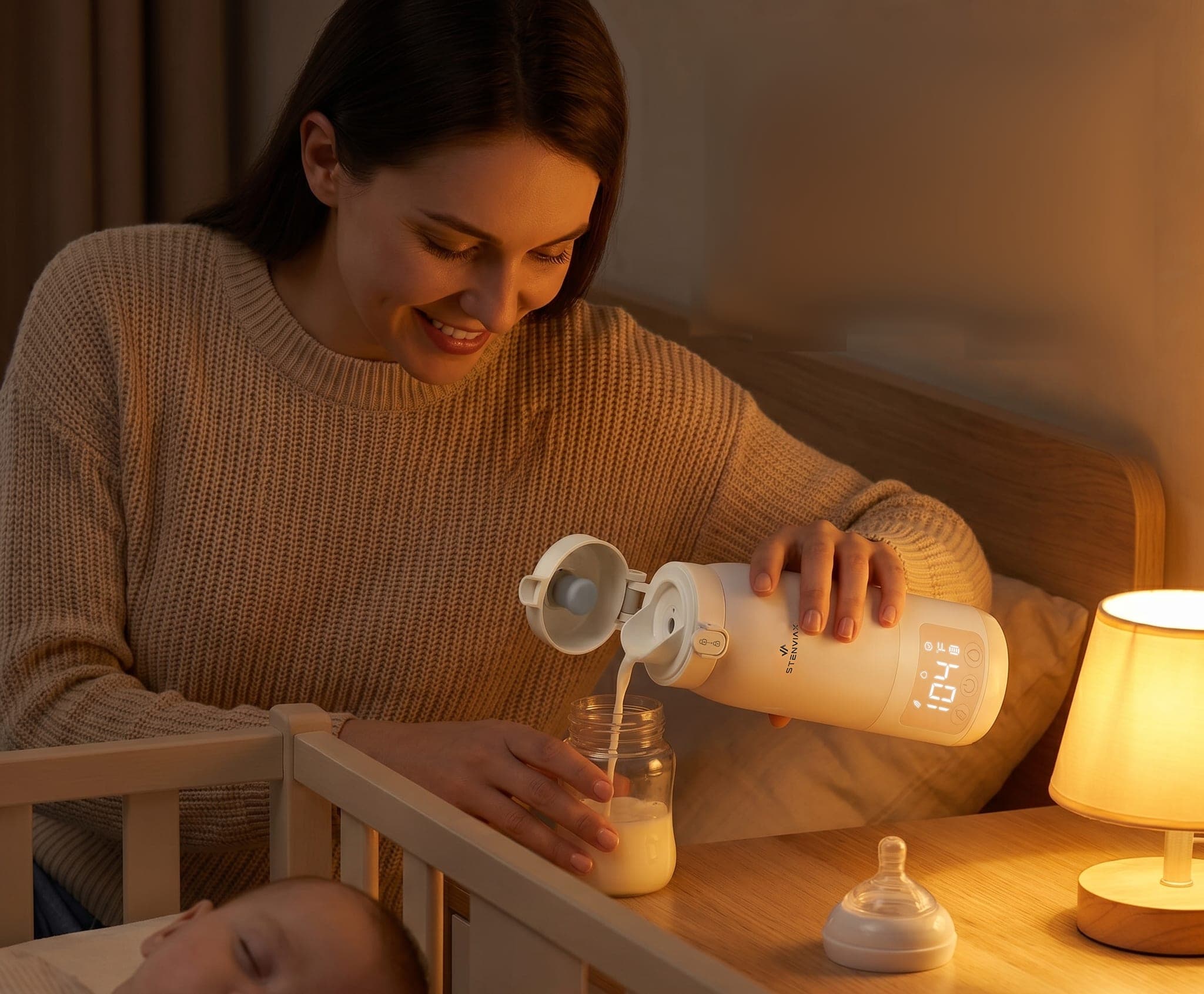
Made for the nights ahead
The Stenviax Portable Bottle Warmer Pro warms 4 oz of breast milk to 98 °F in about 70 seconds, with no cord and no trip to the kitchen. A thoughtful gift for a new mom, too.
Measured from refrigerator temperature at a full charge.
Silk Beige finish