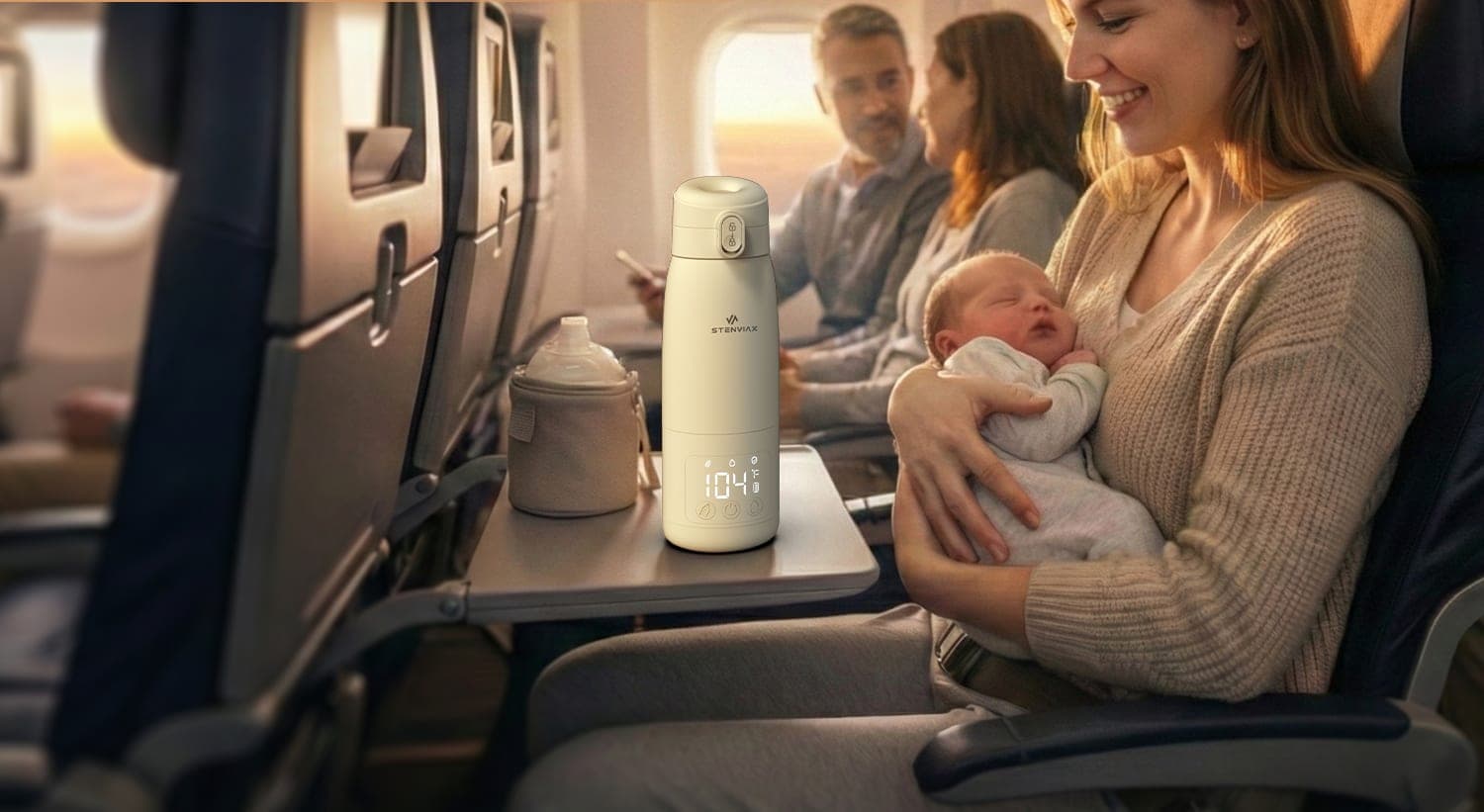
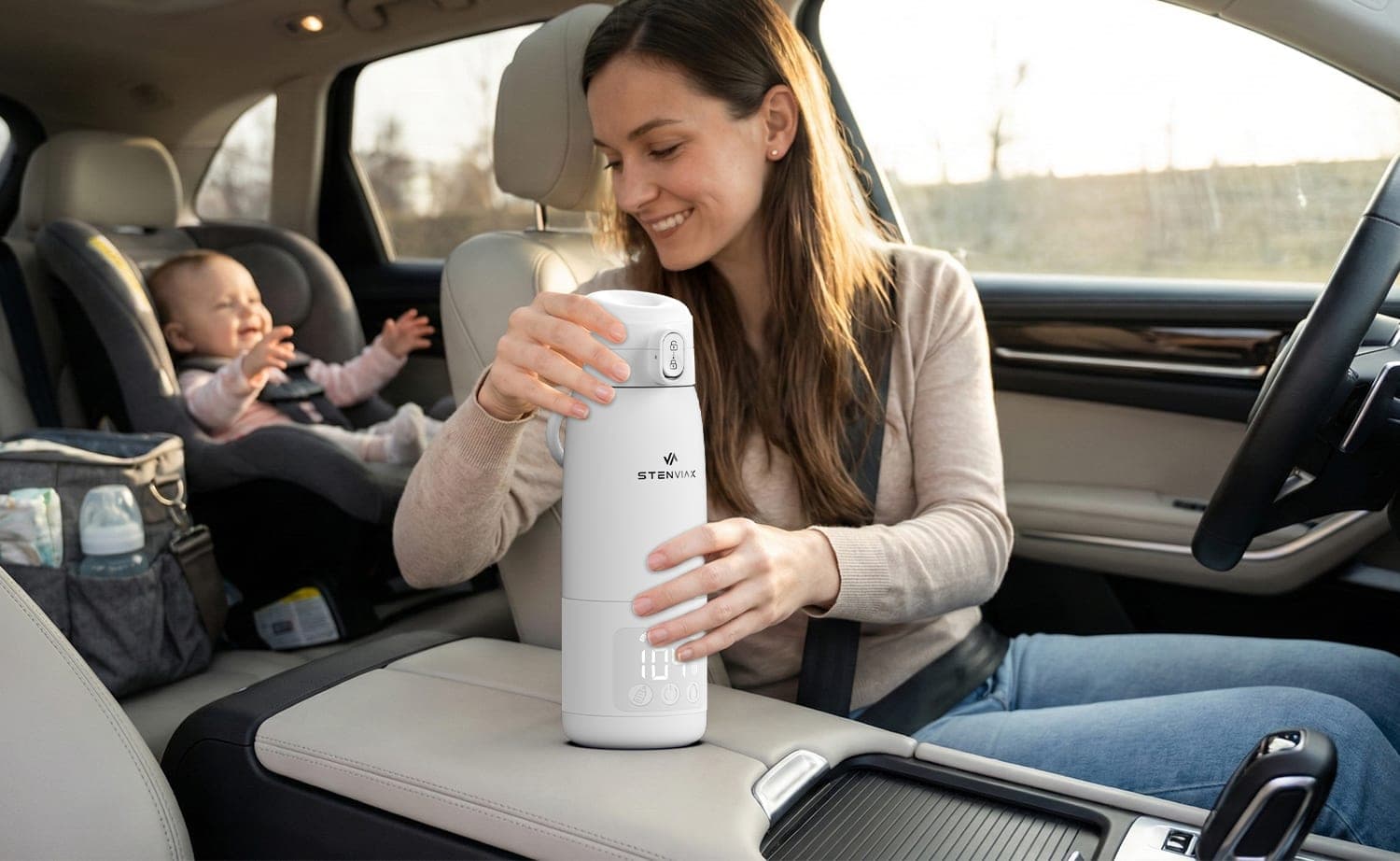
Formula feeding on the go: how to pack and prepare
Formula feeding on the go, made calm: what to pack, how to prepare a bottle away from home, how long prepared formula keeps, and where a portable warmer helps.
The Stenviax team6 min read
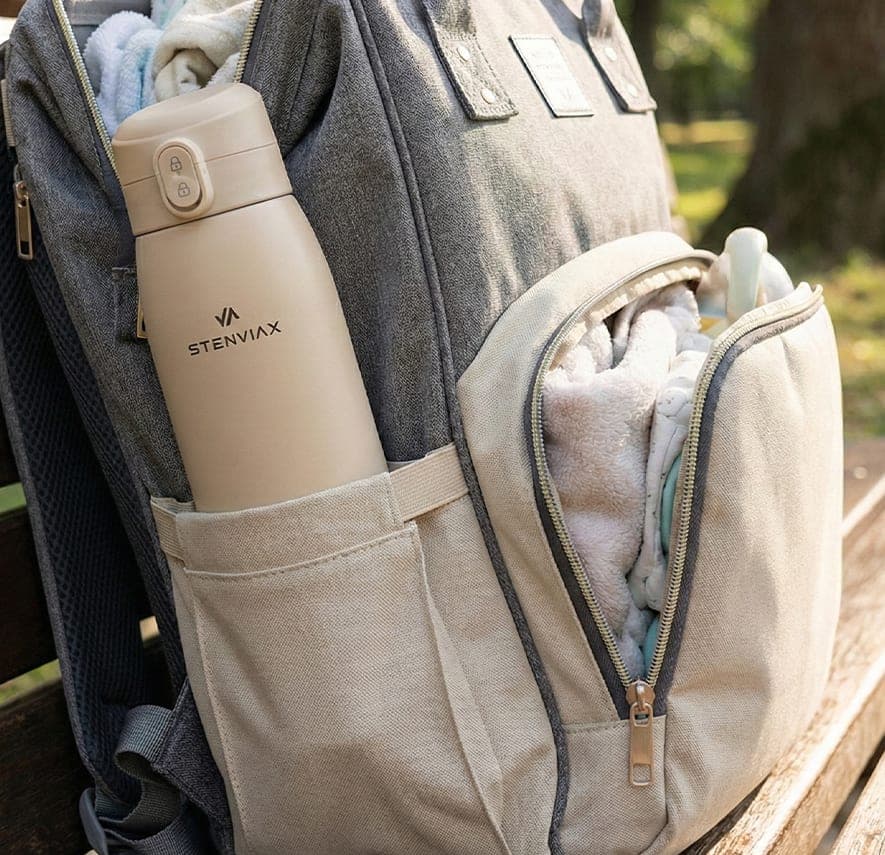
There is something lovely about the first outings together: fresh air, a new place, your baby taking in the world. A little planning keeps feeding time just as gentle out there as it is at home.
Formula feeding on the go comes down to three things: packing what you need, preparing each bottle the way your formula's instructions say, and keeping to the CDC's time limits once a bottle is made.
What should I pack for formula feeding on the go?
A calm outing starts with a bag packed the night before. A simple list:
- Clean bottles and nipples, one for each feed you expect, plus a spare.
- Your formula. Powder in a clean, dry container, measured with the scoop that came with it, or ready-to-feed liquid formula.
- Water from a safe source. The CDC says to mix powdered formula with water from a safe source.
- A bag for used bottles, so they stay apart from the clean ones.
- Burp cloths and a spare outfit, because feeds out and about have their own ideas.
Ready-to-feed formula needs no mixing at all. The AAP's one rule for it is simple: do not add any water to it.
How do I prepare formula safely away from home?
The same way you would at home. The CDC says to carefully read and follow the instructions when preparing powdered infant formula, and to use the amount of water listed on the container. Those instructions are written for your formula, so let them lead.
The AAP adds a helpful order: water first, then powder. Always add the powder to the water that is already in the bottle, not the other way around.
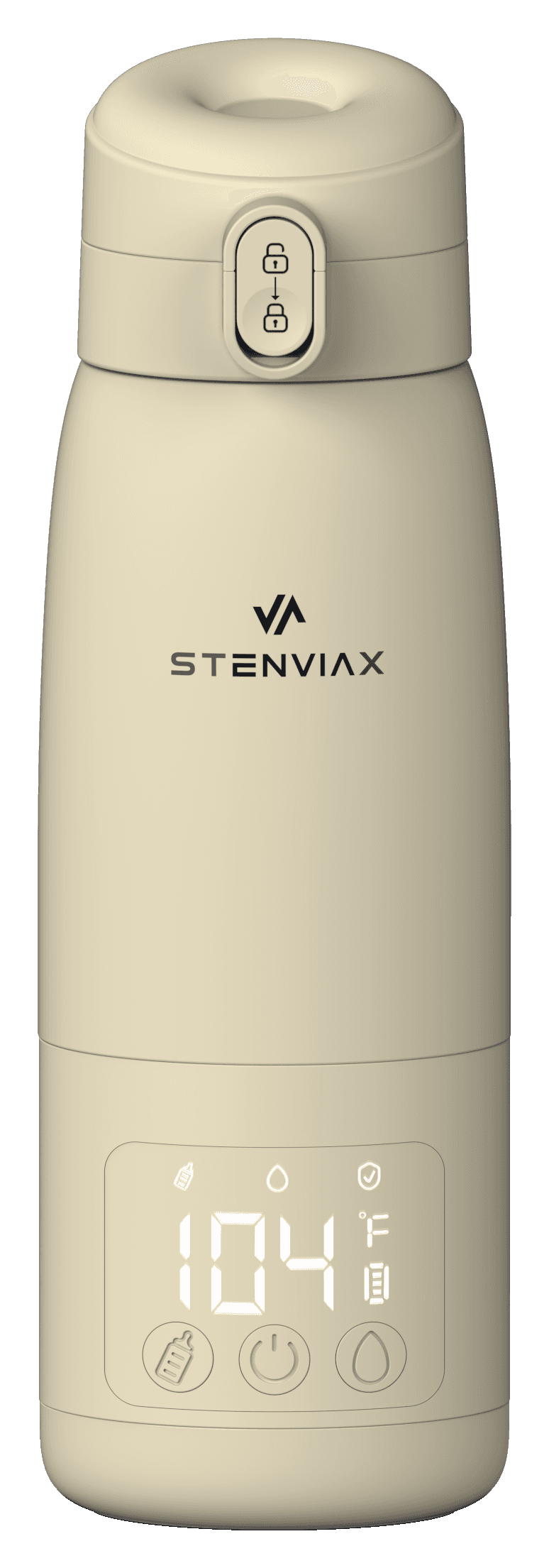
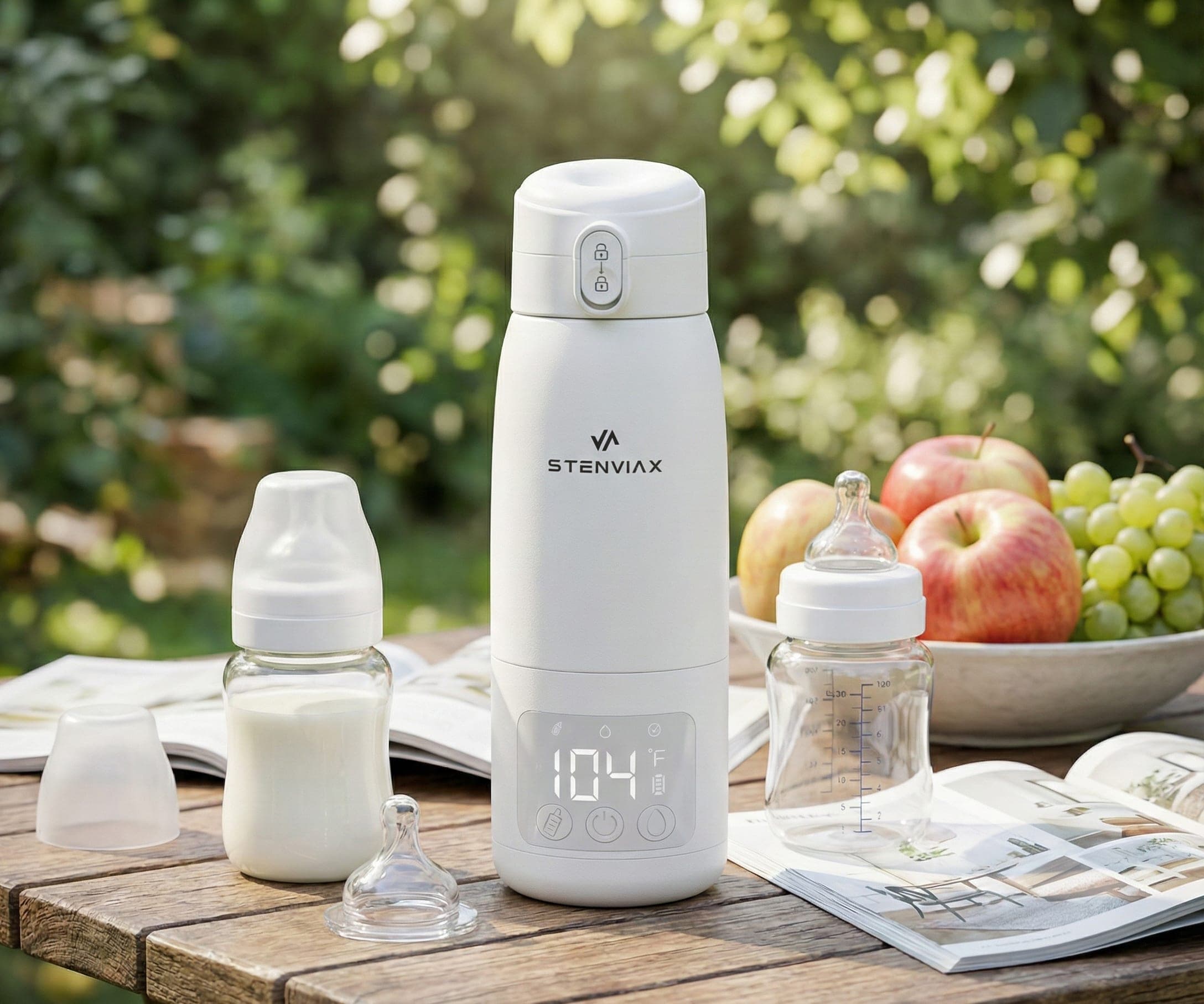
Water at a set warmth, wherever you stop.
Stenviax Portable Bottle Warmer Pro, Silk Beige, $69.90
If your baby likes a warm bottle, the water settings on the Stenviax Bottle Warmer Pro bring water to 98, 104, 110 or 122 °F. Measured from refrigerator temperature at a full charge, 6 oz of water reaches 110 °F in about 2 minutes.
Whatever you use, follow the instructions on your formula for how to prepare it, including the water it calls for.
How long can prepared formula sit out?
Not long, and this is the rule that shapes a day out. The CDC says prepared formula can spoil if it is left at room temperature, so use it within 2 hours of preparation and within 1 hour from when feeding begins.
If you will not start a prepared bottle within 2 hours, the CDC says to put it straight in the fridge and use it within 24 hours. Away from home, it is usually simpler to carry formula and water separately and mix each bottle when your baby is ready to feed.
When the feed is over, the CDC says to throw out any formula left in the bottle. The NHS says the same.
How do I warm a bottle when I'm out?
Never in a microwave. The CDC warns that microwaves heat unevenly and create hot spots that can burn a baby's mouth and throat, which matters just as much in a café or a hotel room as it does at home.
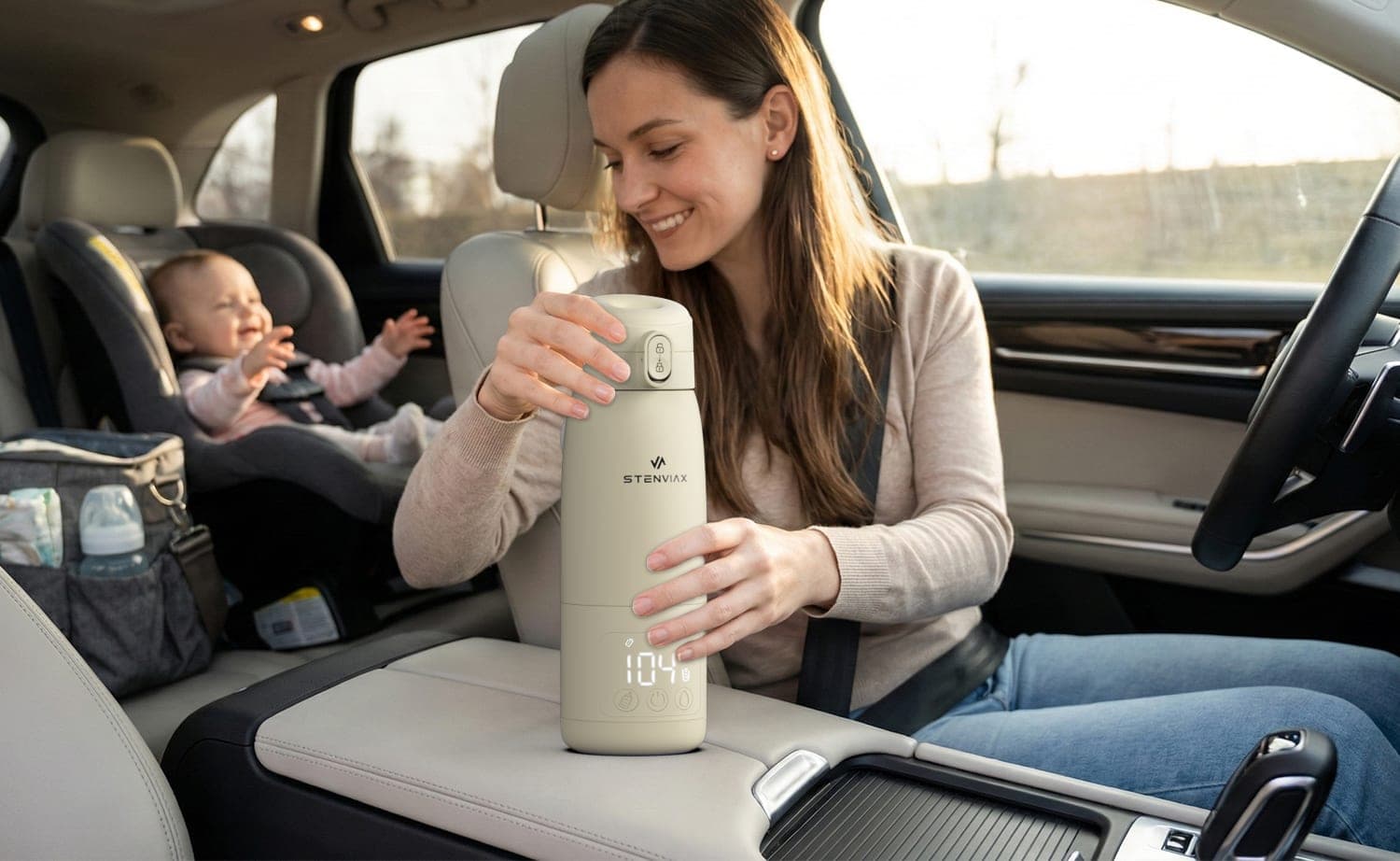
A cordless warmer means you do not need an outlet or a friendly café. The Stenviax Bottle Warmer Pro runs on a 14,000 mAh battery that charges over USB-C, from empty to full in about 50 minutes on the 45 W adapter in the box, and it stands by for up to 48 hours. The lid opens with one thumb, and if the chamber is empty it stops and shows E2 instead of heating.
Before every feed, test the bottle on the inside of your wrist. The NHS says it should feel warm or cool, but not hot. Our story on how to warm a baby bottle on the go covers the car, the plane and the stroller in more detail.
How do I clean bottles when I'm away from home?
The CDC says to clean baby bottles after every feeding. On a short outing, that usually means sealing used bottles in their own bag and washing them properly once you are home. The CDC also says to let clean items air-dry rather than drying them with a dish towel.
The warmer needs only a rinse. Its manual says to rinse the chamber and lid with clean or mildly soapy water as soon as you have poured, and never to submerge it. For longer days in the car, our story on a road trip with a baby picks up where this one ends.
Frequently asked questions
- How long is formula good for once mixed?
- Use it within 2 hours of preparation and within 1 hour from when feeding begins. That is the CDC's guidance. If you will not start the bottle within 2 hours, put it in the fridge straight away and use it within 24 hours.
- Can I make formula bottles ahead of time for a day out?
- Only if you can keep them in a fridge. The CDC says a prepared bottle not used within 2 hours should be refrigerated and used within 24 hours, so for a day out it is simpler to carry formula and water separately and mix each bottle when it is needed.
- Can I save leftover formula for later?
- No. The CDC says to throw out any infant formula left in the bottle after feeding your baby, and the NHS gives the same advice.
- What water should I use for formula when traveling?
- Use water from a safe source, as the CDC advises, in the amount listed on your formula's instructions. Follow those instructions for how to prepare the bottle.
- Can I warm a formula bottle in a microwave?
- No. The CDC says never to use a microwave, because microwaves heat milk unevenly and create hot spots that can burn your baby's mouth and throat.
Sources
- CDC: Infant formula preparation and storage (opens in a new tab)cdc.gov
- AAP (HealthyChildren.org): How to safely prepare formula with water (opens in a new tab)healthychildren.org
- NHS: How to make up baby formula (opens in a new tab)nhs.uk
- CDC: How to clean, sanitize, and store infant feeding items (opens in a new tab)cdc.gov
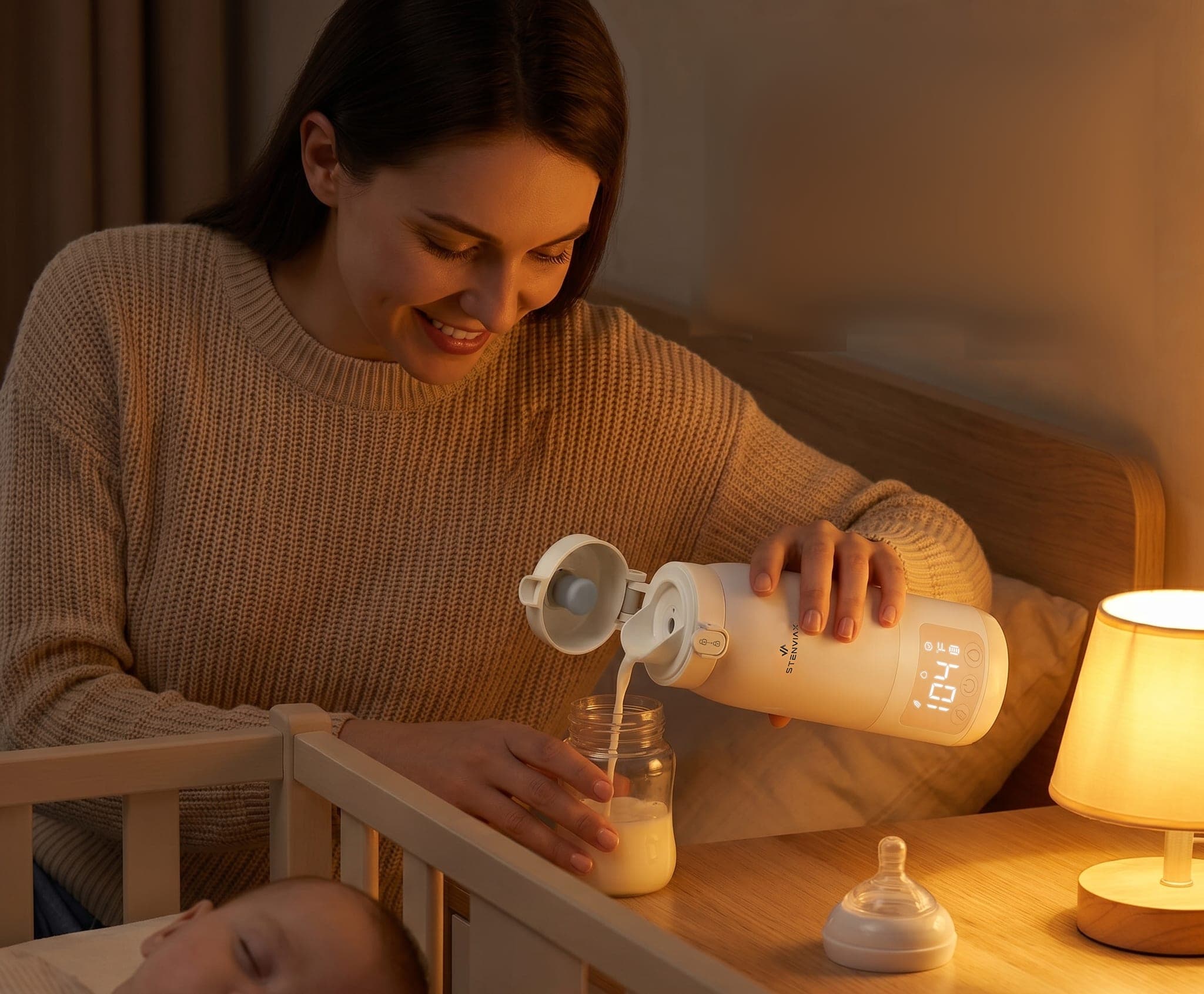
Made for the nights ahead
The Stenviax Portable Bottle Warmer Pro warms 4 oz of breast milk to 98 °F in about 70 seconds, with no cord and no trip to the kitchen. A thoughtful gift for a new mom, too.
Measured from refrigerator temperature at a full charge.
Silk Beige finish